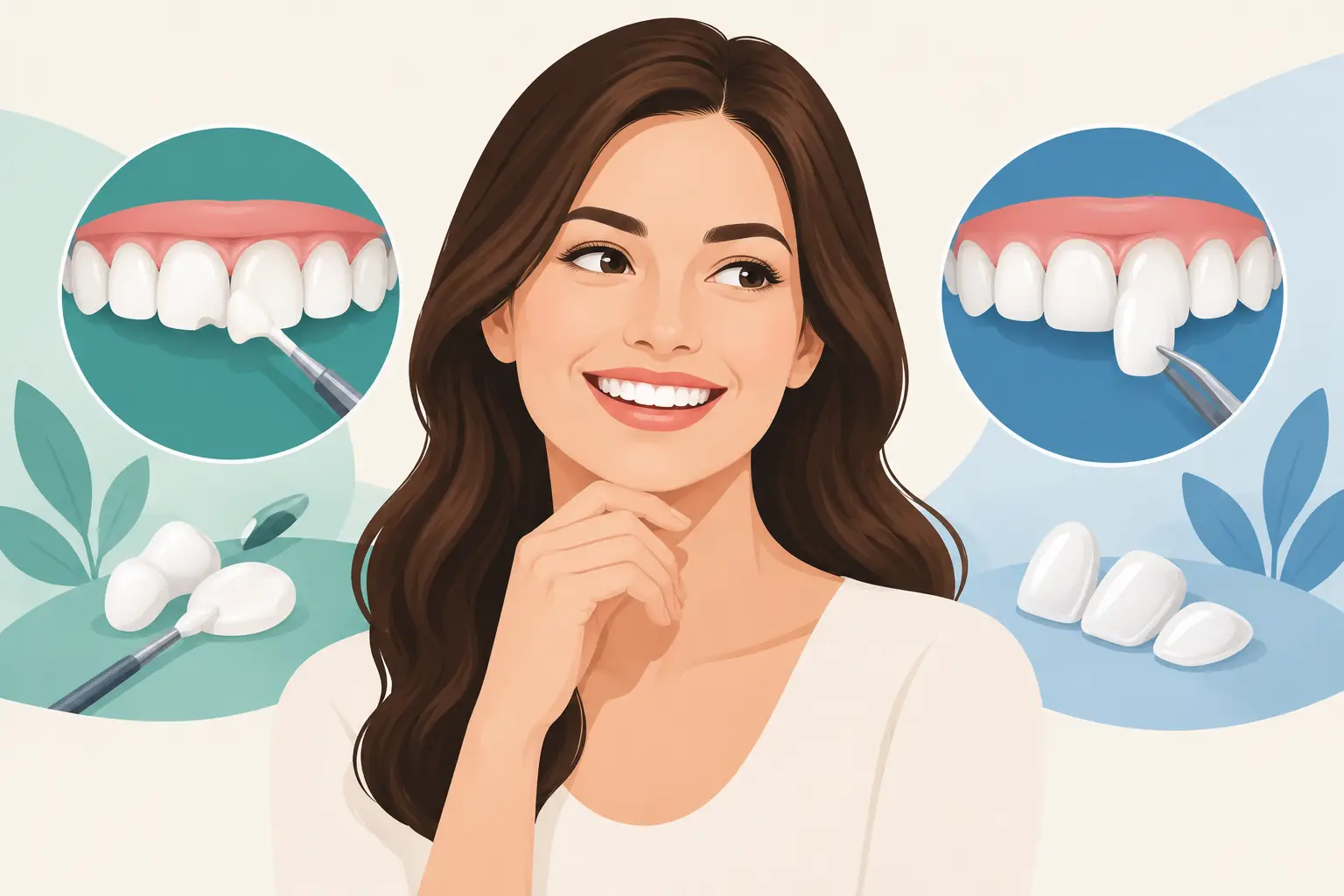
A small chip on a front tooth can feel much more noticeable than it looks to anyone else. So can uneven edges, stubborn discoloration, or a gap that draws your eye every time you smile in a photo. When considering bonding or veneers, the right choice is not simply the one that produces the whitest or most dramatic result. It is the treatment that fits your teeth, your goals, your budget, and the way you want to care for your smile over time.
Both options can create a meaningful cosmetic improvement. They are also quite different in how they are placed, how long they tend to last, and when they make the most sense. A personalized exam is the best way to decide, especially when bite alignment, tooth health, and gum health may affect the result.
Bonding or Veneers: The Key Difference
Dental bonding uses a tooth-colored composite resin, the same type of material commonly used for natural-looking fillings. Your dentist shapes and bonds the resin directly to the tooth, then smooths and polishes it to blend with your natural enamel. It can often be completed in one appointment.
Veneers are thin, custom-made shells that cover the front surface of a tooth. Porcelain veneers are known for their lifelike translucency, stain resistance, and durability. They are made in a dental lab or with advanced in-office technology, then carefully bonded in place after your dentist prepares the teeth as needed.
Think of bonding as a conservative, direct solution for targeted refinements. Veneers are usually a more comprehensive cosmetic option, designed to improve the shape, color, and balance of one or several visible teeth.
When Dental Bonding May Be the Better Choice
Bonding is often a good fit when the concern is small and specific. It can repair a minor chip, soften a pointed edge, close a modest gap, or improve the appearance of a tooth that is slightly short, uneven, or discolored. It may also be useful for reshaping a tooth after orthodontic treatment.
For many patients, the biggest appeal is efficiency. Because composite resin is applied directly to the tooth, bonding can often be completed in a single visit with little to no enamel removal. That makes it a conservative choice for someone who wants a visible improvement without committing to a more involved procedure.
Bonding also tends to have a lower upfront cost than porcelain veneers. However, it is not a permanent shortcut. Composite material can pick up stains over time, particularly from coffee, tea, red wine, and tobacco. It may also chip or wear sooner than porcelain, especially for patients who bite their nails, chew ice, or grind their teeth.
A bonded tooth can usually be repaired or refreshed, which is helpful. Still, it may need polishing, touch-ups, or replacement over the years to keep it looking its best. Good brushing, regular professional cleanings, and avoiding hard-object habits make a real difference.
When Veneers May Be Worth the Investment
Veneers are often the stronger option when several front teeth need a more complete cosmetic change. They can improve persistent discoloration that does not respond well to whitening, worn or uneven teeth, noticeable spacing, irregular shapes, and mild alignment concerns that do not require orthodontics.
Porcelain reflects light in a way that closely resembles natural enamel, which is one reason it can produce such refined, natural-looking results. It is also more resistant to staining than composite bonding. For someone who wants a bright, consistent smile across multiple visible teeth, that long-term color stability can be a major advantage.
The trade-off is that veneers generally require more planning and a higher initial investment. Traditional veneers often involve removing a small amount of enamel to create room for the porcelain and achieve a natural contour. Because enamel does not grow back, this is typically an irreversible decision. Some cases may qualify for minimal-prep or no-prep veneers, but those approaches are not appropriate for every smile.
Veneers are durable, but they are not indestructible. They can chip or come loose with trauma or excessive biting force. If you clench or grind your teeth, a custom night guard may help protect your investment. A veneer also cannot develop decay itself, but the tooth and gum tissue around it still need consistent daily care.
Consider Your Smile Goals, Not Just the Material
The decision between bonding and veneers often comes down to the scale of the change you want. If one tooth has a small chip, bonding may provide exactly the improvement you need. If you are unhappy with the overall color, proportions, and symmetry of several front teeth, veneers may offer a more cohesive result.
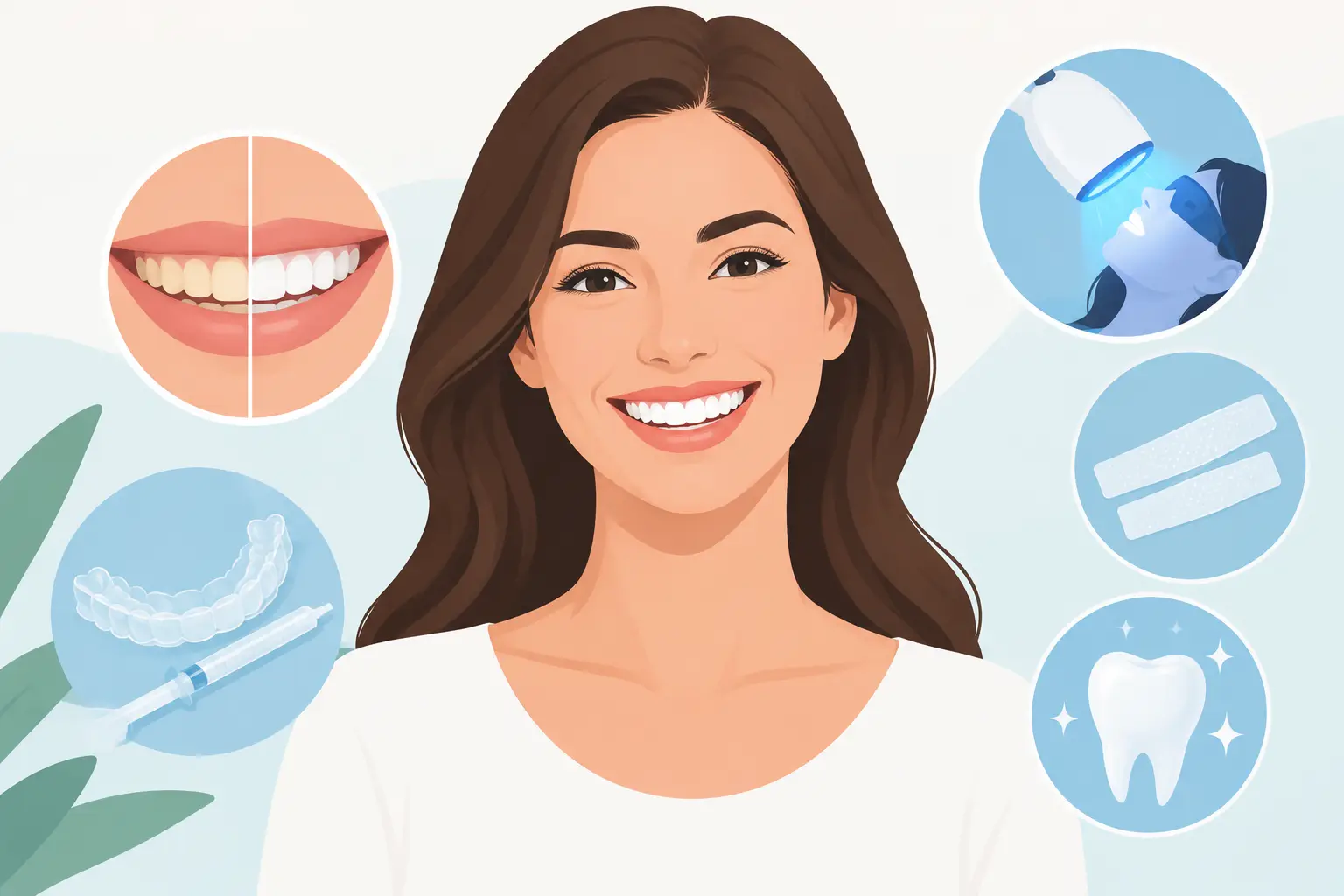
It also helps to be honest about what bothers you most. Whitening may be enough if your teeth are healthy and well-shaped but simply darker than you would like. Invisalign may be a better first step if spacing, crowding, or bite alignment is the primary concern. Cosmetic dentistry works best when the treatment addresses the cause of the concern rather than only covering it.
Your dentist will evaluate more than the front of your teeth. Gum health, existing fillings or crowns, enamel thickness, bite relationship, and habits such as grinding all influence whether bonding or veneers will perform well. A beautiful result should also feel comfortable when you speak, eat, and smile.
Appearance, Durability, and Maintenance
Composite bonding can look very natural when it is carefully color-matched and sculpted. Its surface is slightly more porous than porcelain, though, so it can gradually lose luster or stain. Polishing during routine visits can often improve its appearance.
Porcelain veneers generally hold their color and gloss longer. They are especially appealing for patients who want a polished, uniform look with fewer cosmetic touch-ups. Their durability is a benefit, but it should not be confused with a lifetime guarantee. Like crowns, fillings, and natural teeth, veneers can eventually need repair or replacement.
Both options require the same foundation: brushing twice daily with fluoride toothpaste, cleaning between teeth every day, keeping regular checkups, and treating gum inflammation promptly. Cosmetic dentistry looks its best on a healthy smile.
What Does the Treatment Process Feel Like?
Bonding is usually straightforward and comfortable. After selecting the right shade, your dentist prepares the tooth surface, applies the composite resin, shapes it, and hardens it with a special curing light. Final smoothing and polishing help the restoration blend into your smile. In many cases, numbing is not needed unless the bonding is near a sensitive area or accompanies another procedure.
Veneers involve a more detailed design process. Your dentist will discuss the shape, shade, and overall look you want, while making sure the result complements your facial features and natural teeth. Depending on the case, you may receive temporary veneers while the final restorations are being made. At the final visit, the veneers are tried in, evaluated for fit and appearance, and bonded securely into place.
Patients often feel more confident about cosmetic treatment once they understand that the goal is not a one-size-fits-all “perfect” smile. The goal is a smile that looks healthy, balanced, and like it belongs to you.
How to Make a Confident Choice
If you are deciding between bonding or veneers, start with a cosmetic consultation rather than choosing based on photos alone. Bring up the changes you want, whether that is one chipped tooth, a brighter shade, or a more even smile. Be clear about your timeline, budget, and willingness to maintain the result.
At Finesse Family Dental, patients can discuss cosmetic options in the context of their complete oral health. That matters because a gentle, well-planned approach can help avoid unnecessary treatment while still delivering a visible improvement.
The best next step is a conversation with a dentist who can look closely at your teeth and explain the options in plain language. A small repair may be all you need, or a carefully designed veneer plan may be the change that finally lets you smile without holding back.