A missing tooth can change more than the way your smile looks. It may affect how you chew, how clearly you speak, and how confident you feel in photos or conversations. While implants are a reliable solution for many people, dental implant alternatives can be the better choice when health needs, treatment timing, budget, or personal preferences point in a different direction.
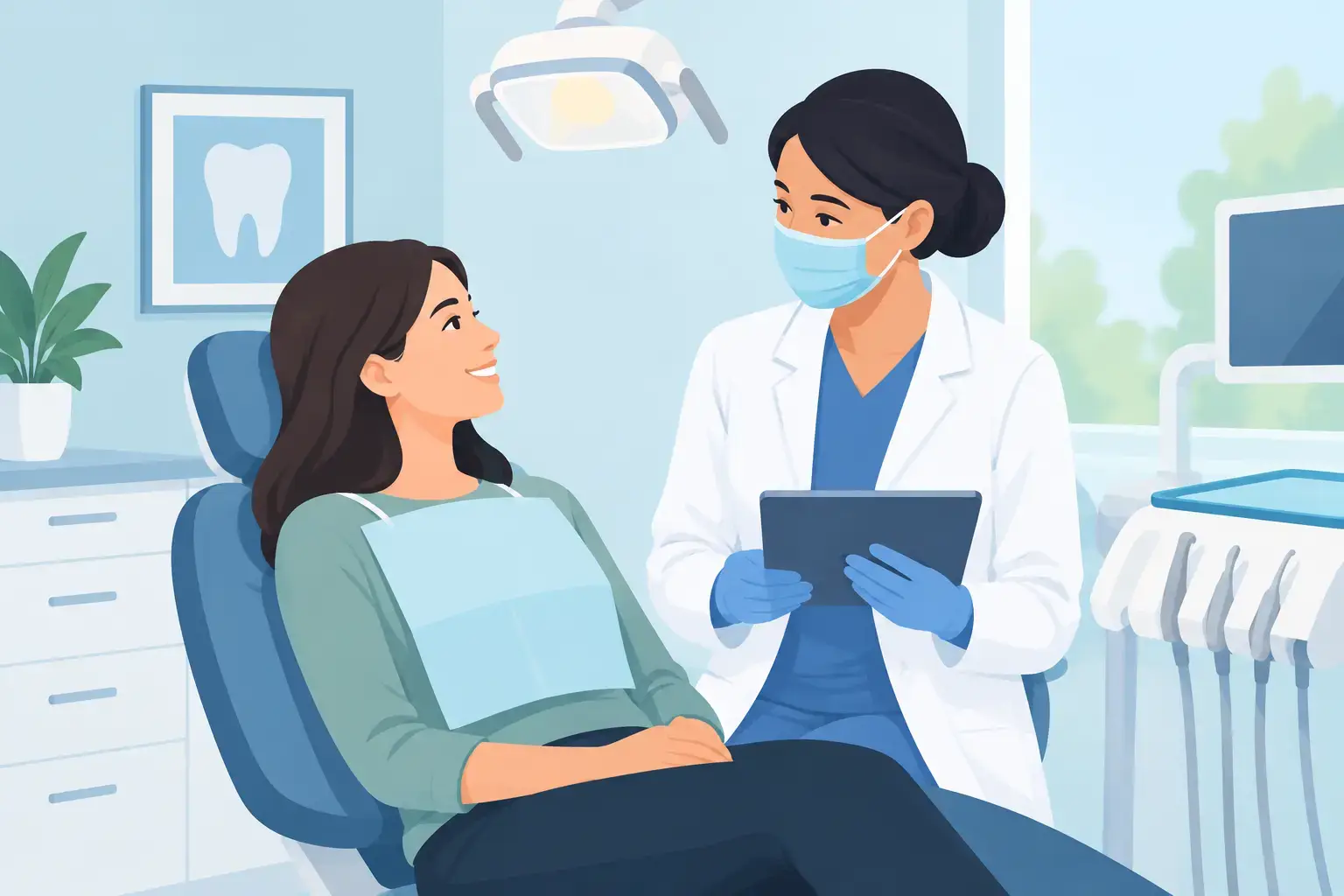
The right treatment is not simply the most advanced option. It is the option that protects your oral health, fits comfortably into your life, and gives you a result you can feel good about. A personalized exam allows your dentist to look at the condition of your teeth, gums, jawbone, bite, and goals before recommending a path forward.
When an Implant May Not Be the Best First Choice
A dental implant replaces a missing tooth root with a small post placed in the jawbone, followed by a custom crown. It can feel and function much like a natural tooth, but it is a surgical treatment that requires enough healthy bone and time for healing.
Some patients are not ready for implant surgery or prefer to avoid it. Others may need gum disease treatment, bone grafting, or healing time after an extraction before an implant can be considered. Medical history can matter as well. Certain medications, uncontrolled diabetes, smoking, and conditions that affect healing deserve a careful conversation with a dentist and, when needed, a physician.
Cost and timing are also valid considerations. An implant is often a long-term investment, but it may not fit every household’s immediate budget or schedule. Fortunately, several effective options can restore appearance and function while supporting your overall dental health.
Dental Implant Alternatives to Consider
Fixed Dental Bridge
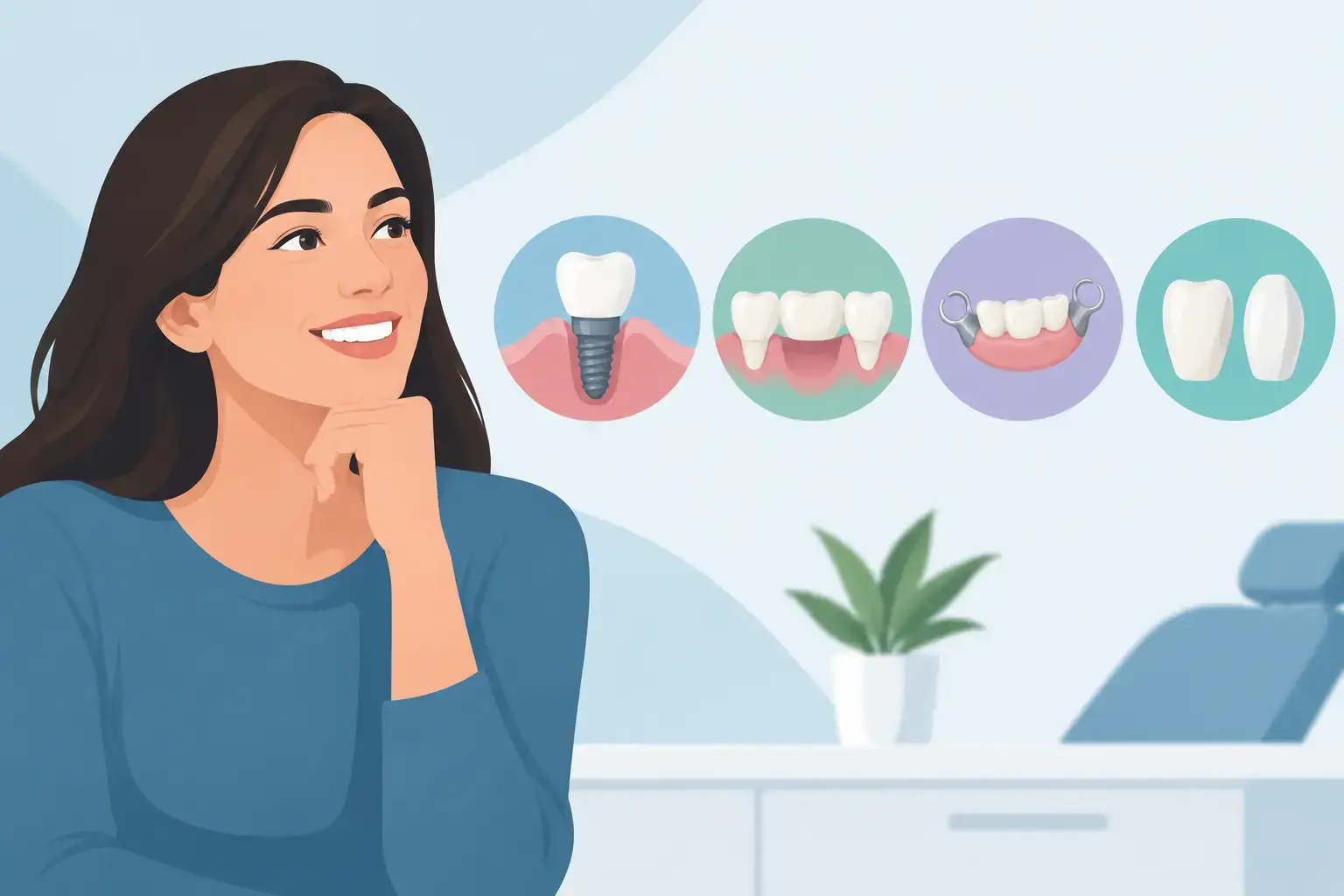
A traditional dental bridge fills the space left by one or more missing teeth. It uses crowns placed over the teeth beside the gap to support a replacement tooth, called a pontic, in the middle. Once secured, a bridge stays in place and is not removed at home.
Many patients appreciate that a bridge can restore a visible tooth relatively quickly and provides a stable chewing surface. It can be an especially practical option when the neighboring teeth already need crowns because of large fillings, cracks, or wear.
The trade-off is that healthy tooth structure may need to be reshaped to hold the supporting crowns. A bridge also does not replace the missing tooth root, so it does not stimulate the jawbone underneath the empty space as an implant does. With excellent home care and regular dental visits, however, a well-made bridge can provide many years of service.
Resin-Bonded Bridge
A resin-bonded bridge, sometimes called a Maryland bridge, is a more conservative fixed option often used to replace a front tooth. The replacement tooth is attached to thin wings bonded to the backs of nearby teeth. In some cases, very little enamel needs to be adjusted.
This approach may be appropriate for a patient with a single missing front tooth, healthy neighboring teeth, and a bite that does not place excessive pressure on the restoration. It is generally not the strongest choice for back teeth, where chewing forces are much higher.
A resin-bonded bridge can be a helpful solution for teens and young adults who are still growing and are not candidates for implants yet. It can also be useful as an interim restoration while a patient decides on longer-term treatment.
Removable Partial Denture
A removable partial denture replaces one or several missing teeth and can be taken out for cleaning. Modern partials may be made with an acrylic base, a metal framework, or flexible materials, depending on the design and the patient’s needs.
A partial denture can be a cost-conscious way to replace multiple teeth, especially when the missing teeth are in different areas of the mouth. It can also help prevent the remaining teeth from shifting into open spaces. For patients who need an immediate option after extractions, a removable appliance may restore the appearance of a fuller smile during healing.
Because it is removable, a partial denture can feel different from a fixed bridge or implant. There is an adjustment period, and the appliance must be cleaned carefully every day. A precise fit matters greatly for comfort, speech, and confidence, which is why professional planning and follow-up adjustments are so valuable.
Complete or Full Dentures
When all teeth in an upper or lower arch are missing, complete dentures can restore the ability to eat, speak, and smile. They are custom-made to fit the gums and create natural-looking tooth shape, color, and facial support.
Dentures have helped generations of patients regain function after extensive tooth loss. They are often a sensible option for individuals who prefer a non-surgical treatment or who are not candidates for implant placement. Immediate dentures can also be placed after extractions, so a patient does not have to spend time without teeth during the healing process.
Still, dentures require realistic expectations. They can move slightly, especially lower dentures, and they do not stop the natural bone changes that can occur after teeth are lost. Regular relines or replacement may be needed as the shape of the gums changes. Some patients eventually choose implant-supported dentures for additional stability, but traditional dentures remain a valuable treatment when they are thoughtfully designed and maintained.
Saving the Natural Tooth
Sometimes the best alternative to replacing a tooth is preserving it. If a tooth is damaged by decay, a deep fracture, or infection but still has a healthy foundation, treatment such as a filling, crown, root canal, or periodontal care may allow it to remain in place.
Keeping a healthy natural tooth is often preferable whenever it is predictably possible. A root canal removes infected tissue inside the tooth, and a crown can protect the remaining structure from breaking. Gum treatment may help stabilize teeth affected by periodontal disease. These treatments are not appropriate for every tooth, particularly when there is severe bone loss or a crack extending below the gumline, but they should be considered before extraction whenever possible.
Orthodontic Space Closure
In select situations, orthodontic treatment can close a gap by moving neighboring teeth into a more favorable position. This is most common when a tooth is missing in an area where shifting teeth will improve the bite and appearance rather than create new problems.
Clear aligners or braces may be part of a broader plan for patients with crowding, spacing, or bite concerns. Space closure takes planning and patience, and it is not right for every missing tooth. But when it fits the smile and bite, it can eliminate the need for a replacement tooth altogether.
How to Compare Your Options
The best choice depends on more than the number of teeth missing. Your dentist will consider the health of your gums, the condition of adjacent teeth, bone levels, your bite, how visible the space is, and whether you want a removable or fixed restoration.
It also helps to think about your daily priorities. A working professional may value a solution with fewer appointments and a predictable timeline. Someone replacing a front tooth may be most concerned about natural appearance. A patient with several missing teeth may need a plan that balances stability, comfort, and affordability. There is no one-size-fits-all answer, and a treatment plan should never make you feel rushed into a decision.
Ask about the expected lifespan of each option, home-care requirements, future maintenance, and what may happen if treatment is delayed. Leaving a gap can allow nearby teeth to drift, change the bite, and make cleaning more difficult. Even if you are not ready for an implant, replacing the tooth or protecting the space can help avoid more complex treatment later.
A Comfortable, Personal Plan for Your Smile
Choosing between dental implant alternatives should feel like an informed conversation, not a sales decision. At Finesse Family Dental, we take time to understand what matters to you, explain the benefits and limitations of each option in clear language, and recommend care that supports your health and confidence.
Whether you need to save a damaged tooth, replace one missing tooth, or rebuild a more complete smile, a thoughtful evaluation can bring clarity. The next helpful step is a dental visit where you can ask questions, review your options, and leave with a plan that feels right for you.