Clear aligners are designed to be discreet, comfortable, and easy to wear, but they spend most of the day against your teeth. Knowing how to clean clear aligners properly helps keep them clear, reduces odor, and supports the healthy smile you are working hard to achieve.
The good news is that aligner care does not need to be complicated. A few consistent habits can prevent the cloudy, yellowed appearance that makes trays more noticeable and can help limit bacteria buildup between your routine dental visits.
How to Clean Clear Aligners Every Day
The most effective approach is simple: rinse your aligners whenever you remove them, gently brush them at least once a day, and soak them as directed by your dentist or aligner manufacturer. Regular care works better than trying to remove heavy buildup at the end of the week.
Start by rinsing the trays under cool or lukewarm running water when you take them out to eat or drink anything other than water. This washes away saliva and helps prevent it from drying on the plastic. Never use hot water. Heat can warp clear aligners, affecting how they fit and potentially interfering with tooth movement.
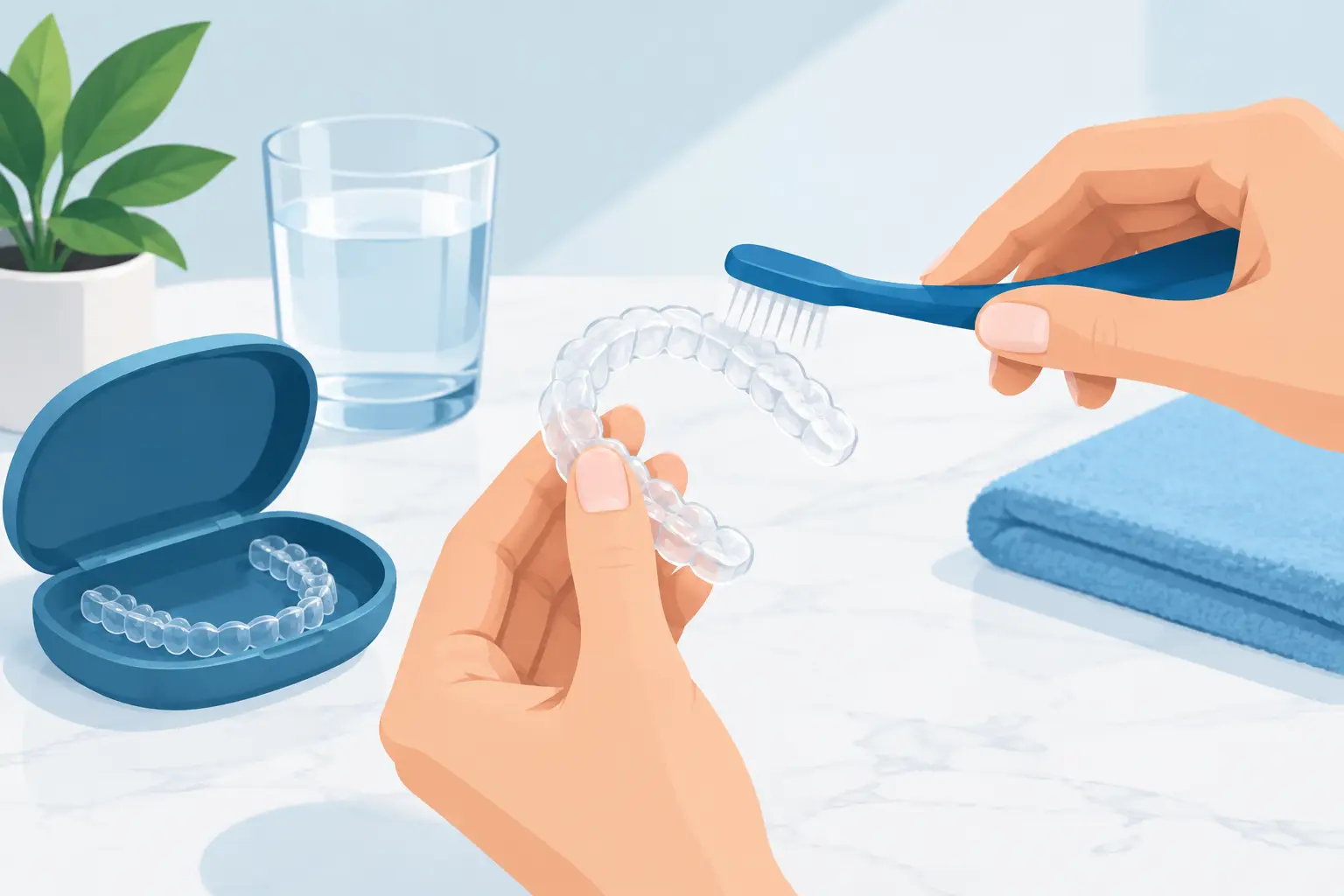
Use a separate, soft-bristled toothbrush to gently clean the inside and outside of each tray. A clear, mild liquid soap can be used in small amounts, followed by a thorough rinse. The goal is to lift away the thin film that develops during wear without scratching the plastic.
For a deeper clean, use an aligner-cleaning product or the soaking method recommended by your dental team. Many patients soak trays once a day or every few days, depending on how quickly buildup develops and how long each set of aligners is worn. Follow the product directions carefully, then rinse the trays before placing them back in your mouth.
Why Toothpaste Is Usually the Wrong Choice
Toothpaste may seem like the obvious cleaner, but it is often too abrasive for clear plastic. Even products that feel smooth can leave tiny scratches on aligners. Those scratches make trays look dull and cloudy, and they can give plaque and bacteria more places to collect.
Avoid whitening toothpaste, gritty paste formulas, and whitening powders. They will not make aligners clearer. In many cases, they make the trays look more worn over time.
Clean Your Teeth Before Putting Aligners Back In
Your aligners cover your teeth closely. If you put them back in after a meal without brushing, food particles, sugars, and bacteria can remain trapped against your enamel. That can increase the risk of bad breath, plaque buildup, cavities, and gum irritation.
Whenever possible, remove your aligners to eat, brush your teeth, floss if needed, and rinse the trays before putting them back in. If you are away from home and cannot brush right away, rinse your mouth well with water and clean your teeth as soon as you can. Keeping a small travel toothbrush and aligner case in a work bag, purse, or backpack makes this habit much easier.
It is also wise to clean your tongue as part of your daily routine. Odor is not always coming from the aligners themselves. Bacteria on the tongue, between teeth, or along the gumline can contribute to unpleasant breath, especially when aligners are worn for 20 to 22 hours a day.
What Can Stain or Damage Clear Aligners?
Clear aligners are durable, but they are not stain-proof. Coffee, tea, red wine, dark sodas, sports drinks, and richly colored foods can discolor trays over time. Smoking and vaping can also stain aligners and affect oral health.
Water is the safest drink while wearing aligners. If you choose to have coffee or another beverage, remove the trays first whenever practical. This protects the plastic from staining and reduces the chance that sugary or acidic liquids stay against your teeth.
There are also a few cleaning methods to avoid. Do not boil aligners, place them in the dishwasher, or use mouthwash that contains strong dyes or alcohol. Colored mouthwash can tint the trays, while harsh chemicals may damage the material. Denture cleaners are not always appropriate, either. Some formulas can be too aggressive for certain aligner plastics, so ask your dentist before using them.
Do Not Wrap Aligners in a Napkin
One of the most common reasons patients lose an aligner is wrapping it in a tissue or napkin during a meal. It is easy for someone to throw it away by mistake. Always place trays in their protective case when they are not in your mouth.
This habit protects your aligners from damage, accidental loss, pets, and bacteria from countertops or bags. A clean case matters, too. Rinse it daily and wash it with mild soap and water so you are not placing freshly cleaned aligners into a dirty container.
A Practical Morning and Evening Routine
A dependable routine keeps aligner care from becoming another item on a busy to-do list. In the morning, remove your trays, rinse them with cool water, and gently brush them before brushing and flossing your teeth. Put them back in only after your mouth is clean.
At night, repeat the process. This is also a convenient time to soak the aligners if your dentist recommends it. After soaking, rinse thoroughly, brush and floss your teeth, and place the trays back in before bed.
If you switch to a new set of aligners every one or two weeks, they may not have time to develop significant staining. Even so, daily cleaning still matters. A clean tray feels better, looks better, and helps you maintain healthier conditions around your teeth and gums throughout treatment.
When Cloudiness or Odor Does Not Go Away
If your aligners still look cloudy after careful cleaning, they may have surface scratches or mineral buildup that cannot be fully removed at home. This does not necessarily mean the trays are unsafe to wear, especially if you are close to changing to the next set. However, it is worth mentioning at your next appointment.
Persistent odor can be a sign that the trays, case, or your mouth need more attention. Make sure you are cleaning both aligners and teeth consistently, drinking enough water, and flossing daily. If you have bleeding gums, soreness, a bad taste, or ongoing bad breath, schedule a dental evaluation. Gum inflammation, decay, or an infection should be addressed promptly rather than covered up with mints or mouthwash.
You should also contact your dental office if an aligner cracks, becomes warped, no longer fits properly, or is lost. Wearing a damaged tray or skipping ahead without professional guidance can affect your treatment progress.
Clear Aligner Care Supports a Healthier Smile
Clear aligner treatment is about more than straightening teeth. It is also an opportunity to build stronger daily habits around brushing, flossing, hydration, and preventive care. Patients who keep their trays clean tend to feel more confident wearing them in meetings, at school, and around friends and family.
At Finesse Family Dental, we encourage patients to bring questions about aligner care to their visits. Personalized guidance is especially helpful if you have attachments, gum sensitivity, dental restorations, or a history of cavities. Your treatment should feel manageable, not stressful.
A clean aligner is a small daily step, but it helps protect the comfort, appearance, and health of the smile you are creating.