A pediatric first dental appointment is often much easier than parents expect. There may be no cleaning chair drama, no complicated treatment, and no reason for a child to arrive feeling frightened. Instead, the visit is a calm introduction to dental care, a chance to check early development, and an opportunity for your family to begin building healthy habits with support from a trusted dental team.
For many Fremont parents, the hardest part is simply knowing when to schedule and how to prepare. A little planning can make that first visit feel positive for everyone.
When Should Your Child See the Dentist?
The American Academy of Pediatric Dentistry recommends a child’s first dental visit by their first birthday or within six months after the first tooth appears. That can feel early, especially when there are only one or two tiny teeth to examine. But early visits are about much more than checking for cavities.
Baby teeth help children chew, speak clearly, and hold space for adult teeth. They can also develop decay sooner than many parents realize, particularly when frequent snacking, sweet drinks, or nighttime milk exposure are involved. An early appointment allows the dentist to monitor tooth eruption, jaw development, bite patterns, and oral habits before small concerns become bigger ones.
If your child is older and has not yet had a dental visit, there is no need to feel embarrassed or delay further. Scheduling now is a positive step. The goal is not perfection. It is helping your child feel comfortable receiving regular care.
What Happens at a Pediatric First Dental Appointment?
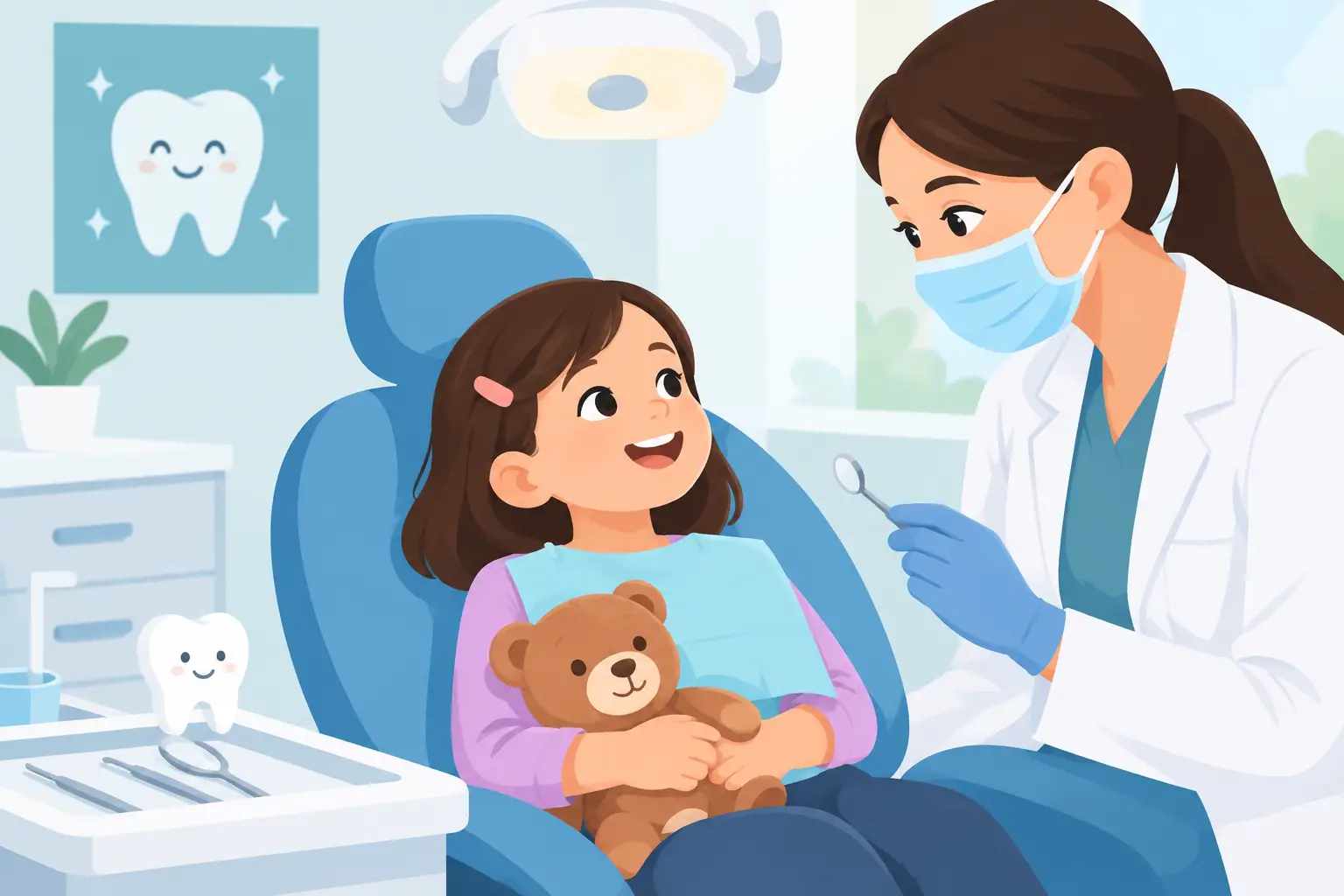
A first visit is tailored to your child’s age, temperament, and comfort level. A toddler who is shy, tired, or unsure may need a slower introduction than an older child who is eager to sit in the dental chair. Gentle pediatric care respects that difference.
Your dentist or hygienist may begin by talking with you while your child sits on your lap. For infants and young toddlers, the exam may be completed in a knee-to-knee position, where the child rests their head near the dentist while remaining close to a parent. Older children may enjoy taking a ride in the chair and seeing the overhead light.
The clinical team will look at the teeth and gums, check how the bite is developing, and watch for signs of decay, injury, crowding, or unusual eruption patterns. They may gently clean visible plaque or discuss whether fluoride is appropriate for your child. X-rays are not automatically needed at every first visit. Whether they are recommended depends on your child’s age, cavity risk, symptoms, and what the dentist can see during the exam.
Just as valuable is the conversation. Parents can ask about brushing, thumb sucking, pacifier use, teething, nutrition, and anything else that has raised a question at home. A quality first appointment should leave you with clear, practical guidance rather than a confusing list of instructions.
Expect a Visit Built Around Comfort
Children notice the mood in the room. When adults seem rushed or anxious, they often become more cautious too. A caring dental office will use simple language, explain unfamiliar tools in child-friendly terms, and allow time for a child to adjust.
That does not mean every child will be delighted from the start. Some children cry during a first appointment, especially between ages one and three. Crying is not a sign that the visit failed. It is a normal response to a new place, new sounds, and a new routine. With kind, consistent visits, most children gain confidence quickly.
How to Prepare Your Child Without Creating Fear
The best preparation is usually simple and upbeat. Tell your child they are going to the dentist so their teeth can be counted and kept strong. Avoid describing the appointment with words such as “shot,” “drill,” “hurt,” or even “don’t be scared.” Even when meant to reassure, those phrases can introduce worries a child did not have.
You can read a cheerful book about visiting the dentist or play dentist at home with a stuffed animal. Let your child practice opening wide, then offer praise. Keep the conversation brief for younger children. A long explanation can make an ordinary appointment seem like a major event.
Try to schedule at a time when your child is usually rested and fed. Morning appointments often work well for young children, although every family’s routine is different. Bring a favorite comfort item if it helps, but avoid arriving with sugary snacks or drinks. If possible, complete a thorough toothbrushing before the visit.
Parents can also prepare by completing health history and insurance details in advance. This helps the team spend more time focused on your child rather than paperwork. If your child has a medical condition, takes medications, has developmental or sensory needs, or has had a difficult dental or medical experience, share that information openly. Personalized care starts with understanding the whole child.
Healthy Habits Start Before All the Baby Teeth Arrive
A first dental appointment is an ideal time to reset daily routines. For babies, wipe gums with a clean, soft cloth before teeth appear. Once the first tooth erupts, brush twice a day with a soft, age-appropriate toothbrush and a rice-grain-sized smear of fluoride toothpaste for children under age three. For children ages three to six, use a pea-sized amount and supervise brushing so they spit out excess toothpaste instead of swallowing it.
The technique matters, but consistency matters more. Young children need help brushing thoroughly, particularly along the gumline and on back teeth where food can remain unnoticed. Most children need hands-on help well beyond the toddler years. A useful rule is to assist until they can tie their own shoes well, though every child develops coordination at a different pace.
Food and drink habits also play a major role. Water between meals is the most tooth-friendly choice. Frequent sipping on juice, sports drinks, sweetened milk, or soda gives cavity-causing bacteria repeated fuel throughout the day. Fruit, crackers, and other snacks are not off-limits, but frequent grazing can increase risk because teeth have less time to recover between exposures.
Nighttime deserves special attention. After brushing before bed, water is the best choice. Putting a child to sleep with a bottle or sippy cup containing milk, formula, juice, or other sweet drinks can increase the risk of early childhood decay, especially when it becomes a regular habit.
Questions Worth Asking at the First Visit
Parents do not need to know dental terminology to ask good questions. The most helpful questions are the ones connected to your child’s daily routine and development. You might ask whether the teeth are erupting on schedule, whether your child has any areas that need closer monitoring, or how often your child should return for preventive care.
It can also be helpful to ask about a pacifier, thumb sucking, mouth breathing, grinding, or a family history of crowding and cavities. Some habits resolve naturally with time, while others need monitoring or earlier guidance. The answer often depends on your child’s age, the intensity of the habit, and what the dentist sees in the mouth.
If your child is especially nervous, ask how the office helps children acclimate. A practice that welcomes questions and adapts the experience to the child can make a meaningful difference over time.
A Positive Start Can Shape Future Care
The goal of a pediatric first dental appointment is not simply to get through one exam. It is to help a child learn that the dentist is a familiar, helpful part of staying healthy. When care begins early, appointments can remain focused on prevention, encouragement, and steady growth rather than urgent problems.
At Finesse Family Dental, families can expect a gentle, professional approach that keeps both children and parents informed. Bringing your child in early gives your family a comfortable place to ask questions, establish routines, and protect a growing smile one visit at a time.