When you are missing a tooth, the question usually gets practical fast. You want to chew comfortably, smile without thinking about the gap, and choose an option that makes sense for your health and budget. That is why the dental bridge vs implant decision matters so much – both can restore your smile, but they work in very different ways.
For many patients, the right choice is not about which treatment is “better” in general. It is about which one fits your mouth, your timeline, your bone and gum health, and your long-term goals. A good dental exam can clarify that quickly, but it helps to understand the basics before you sit in the chair.
Dental bridge vs implant: the main difference
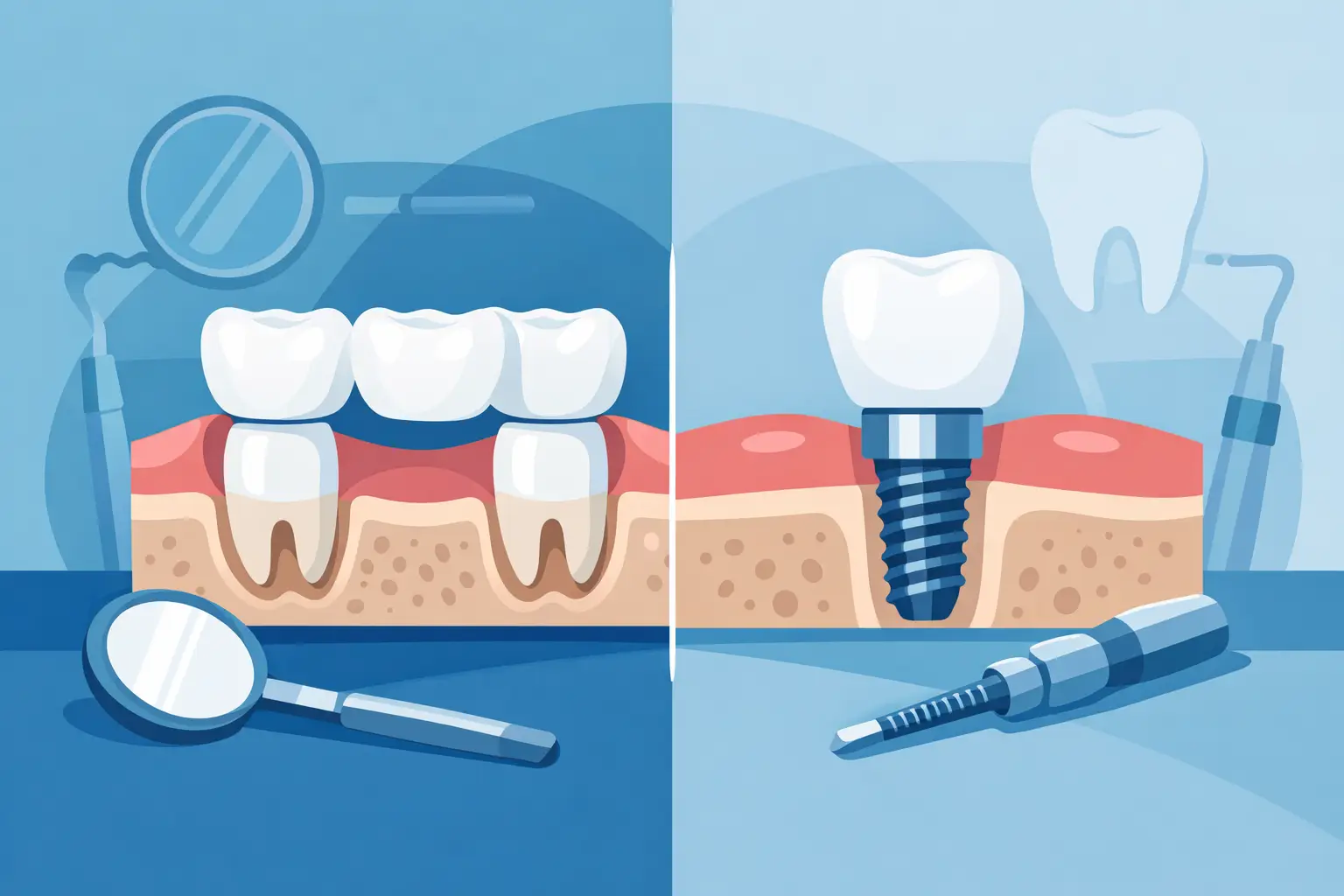
A dental bridge replaces a missing tooth by using the teeth on either side of the space for support. Those neighboring teeth are typically prepared for crowns, and the artificial tooth sits between them. The bridge is fixed in place, so it does not come out like a denture.
A dental implant replaces the missing tooth in a different way. Instead of relying on adjacent teeth, it uses a small titanium post placed in the jawbone to act like an artificial root. After healing, a custom crown is attached on top.
That difference affects almost everything else, including treatment time, cost, bone preservation, and how much work is done to nearby teeth.
When a bridge makes more sense
A bridge can be an excellent solution, especially if you want a reliable replacement without the longer healing timeline that often comes with an implant. In many cases, a bridge can restore appearance and function more quickly.
This option may make sense if the teeth next to the missing space already need crowns. If those teeth are cracked, heavily filled, or worn down, using them to support a bridge may be a practical choice because they already need restoration.
A bridge may also be a better fit if you are not a good candidate for implant surgery right now. Some patients have bone loss, certain medical concerns, or gum disease that should be addressed before considering an implant. Others simply prefer a non-surgical option.
Cost can also be part of the conversation. In many situations, the upfront cost of a bridge is lower than an implant, especially if bone grafting or additional procedures would be needed first.
When an implant makes more sense
An implant is often the closest replacement to a natural tooth because it stands on its own. It does not require support from the neighboring teeth, which means healthy adjacent teeth can remain untouched.
That independence is one of the biggest advantages. If the teeth beside the gap are healthy and strong, many patients prefer not to prepare them for crowns just to replace one missing tooth.
Implants also help preserve the jawbone. When a tooth root is missing, the bone in that area can slowly shrink over time. Because an implant stimulates the bone much like a natural root, it can reduce that loss. A bridge does not provide that same bone support.
For patients thinking long term, that matters. An implant can support a stable bite, maintain facial structure better in the missing-tooth area, and often feel very natural once fully healed.
How treatment time compares
If you need the faster path, a bridge often wins. After the teeth are prepared and impressions are taken, the final restoration can usually be completed in a matter of weeks.
An implant process usually takes longer. First, the implant is placed. Then the bone needs time to heal and bond with the implant, which can take several months. After that, the final crown is made and attached.
That said, not every case follows the same schedule. Some patients need extra healing, bone grafting, or gum treatment before an implant can be completed. Others move through the process smoothly. If timing matters because of work, travel, or an upcoming event, bring that up early during your consultation.
What about comfort and function?
Both bridges and implants are fixed options, so they generally feel much more secure than removable dentures. Most patients can speak and chew well with either one once they adjust.
A bridge may feel normal fairly quickly because the treatment does not involve healing in the bone the way implant placement does. An implant, however, often feels especially natural after full healing because it is anchored directly in the jaw.
Chewing comfort also depends on where the missing tooth is located. A front tooth replacement raises cosmetic concerns first, while a back tooth replacement has to handle more bite force. That can influence which option gives the best long-term result.
Lifespan and long-term maintenance
This is where the dental bridge vs implant comparison becomes more nuanced. Both options can last for many years when they are well planned and well cared for, but they have different maintenance needs.
A bridge can serve a patient well for a long time, yet its lifespan partly depends on the supporting teeth. If decay, fracture, or gum problems affect those teeth, the bridge may need repair or replacement. Cleaning underneath the bridge also takes some technique, and your dental team will usually show you how to use floss threaders or other cleaning aids.
Implants do not get cavities, but they still require excellent care. The gums and bone around the implant need to stay healthy, and plaque buildup can lead to inflammation around the implant if home care slips. Regular checkups and professional cleanings are just as important with implants as they are with natural teeth.
In many cases, implants have a strong long-term track record. But that does not mean they are maintenance-free. Smoking, uncontrolled diabetes, clenching, and gum disease can all affect outcomes.
Cost now versus cost over time
Many patients understandably focus first on upfront cost. A bridge is often less expensive at the beginning, which can make it the more accessible choice.
An implant usually costs more initially because it involves surgery, multiple stages, and custom restoration. If grafting or other preparatory treatment is needed, the total can rise further.
Still, lower upfront cost does not always mean lower long-term cost. A bridge may need replacement down the road, especially if the supporting teeth develop problems. An implant may be more expensive at the start but can offer value over time for the right candidate.
This is one reason personalized treatment planning matters. A trustworthy dentist should help you compare both the immediate investment and the likely future maintenance.
Your oral health matters more than the internet’s opinion
Online advice can make it sound like implants are always the premium choice and bridges are the backup plan. Real life is not that simple.
If you have excellent bone support, healthy gums, and want to preserve adjacent teeth, an implant may be ideal. If your neighboring teeth already need crowns, or you want a quicker non-surgical solution, a bridge may be the smarter route. If gum disease is present, that needs attention before either option can be expected to last well.
Your bite also matters. Patients who grind or clench can put heavy force on any restoration. The location of the missing tooth, the condition of nearby teeth, and your overall dental history all shape the recommendation.
Questions worth asking at your consultation
A good consultation should leave you feeling informed, not pressured. Ask whether the teeth next to the gap are healthy, whether you have enough bone for an implant, how long each option is expected to last in your case, and what kind of maintenance each one will require.
It is also reasonable to ask how each treatment will affect appearance, how many visits are involved, and whether your PPO insurance may help with any portion of care. Those details often make the decision feel much clearer.
At a practice like Finesse Family Dental, the goal is to help patients understand their options in a calm, supportive setting so the final choice feels practical and confident, not overwhelming.
So which one should you choose?
If you want the shortest answer, choose the option that best protects your long-term oral health while fitting your current needs. Sometimes that is an implant because it preserves bone and leaves neighboring teeth alone. Sometimes that is a bridge because it restores the area efficiently and makes excellent use of teeth that already need crowns.
The best treatment is the one that works for your whole situation, not just the one that sounds most advanced. A thoughtful exam, clear imaging, and an honest conversation can turn a confusing decision into a very manageable one.
If you are weighing a bridge or implant, do not focus only on replacing the tooth. Think about how you want your smile to feel, function, and stay healthy for years ahead.