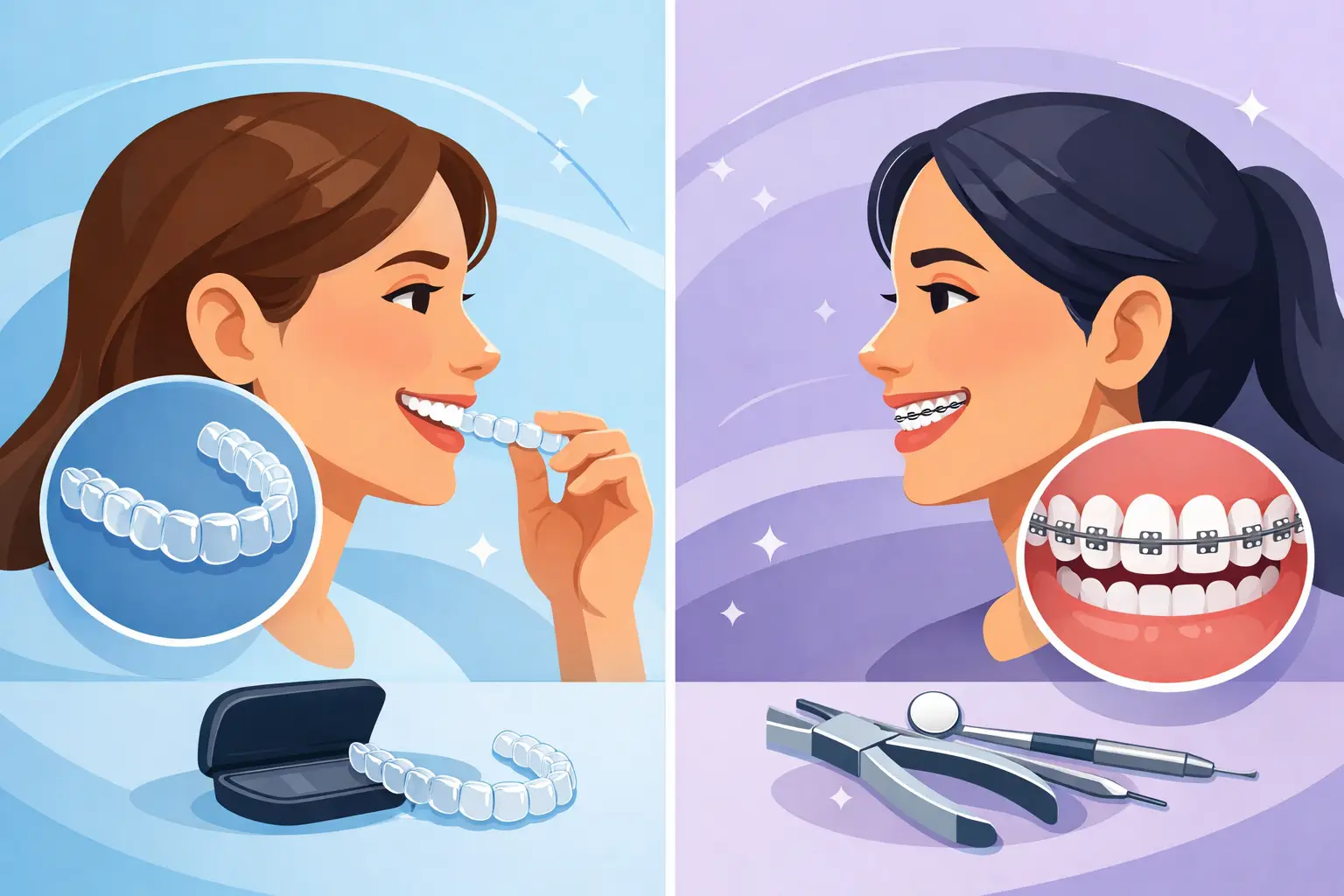
A lot of adults start orthodontic treatment with the same private thought: I want a straighter smile, but I do not want my daily life turned upside down. That is why the Invisalign vs braces adults question comes up so often. For working professionals, busy parents, and anyone who wants to improve their smile without feeling self-conscious, the right choice is not just about looks. It is about comfort, convenience, cost, and how treatment fits into real life.
Some adults are excellent candidates for clear aligners. Others will get better, faster, or more predictable results with braces. The best option depends on your bite, your goals, and how consistent you can be with treatment.
Invisalign vs braces for adults: what is the real difference?
Both Invisalign and braces are designed to move teeth into healthier positions. The main difference is how they do it.
Invisalign uses a series of custom-made clear aligners that fit snugly over your teeth. You wear them most of the day and switch to a new set on a schedule recommended by your dentist. The aligners apply gentle pressure over time, gradually shifting your teeth.
Traditional braces use brackets attached to the teeth and wires that are adjusted periodically. Because braces stay in place all the time, they work continuously without needing you to remember to put anything back in.
For adults, that difference matters. Invisalign offers flexibility and a more discreet look. Braces offer structure and control, especially in more complex cases. Neither is automatically better. Each has strengths, and each comes with trade-offs.
Appearance and confidence in daily life
For many adults, appearance is the first reason Invisalign gets attention. Clear aligners are much less noticeable than braces, especially in work meetings, social settings, and photos. If you have a public-facing job or simply prefer a more subtle treatment option, Invisalign can feel easier to live with.
Braces are more visible, even though modern braces are smaller and more comfortable than older versions. Some adults do not mind that at all. Others feel hesitant about wearing brackets and wires for a year or two. That hesitation is valid. Cosmetic confidence matters, particularly when treatment is meant to improve your smile.
Still, visibility should not be the only factor. A discreet treatment is appealing, but only if it can deliver the result your teeth and bite actually need.
Comfort and adjustment
Most adults want to know one simple thing: which one hurts less?
The honest answer is that both can cause temporary soreness, especially after adjustments or when moving to a new aligner tray. That pressure is part of how teeth move. It usually improves within a few days.
Invisalign has a comfort advantage for many people because there are no metal brackets or wires rubbing against the inside of the cheeks and lips. The trays are smooth, and that can make the experience feel gentler overall.
Braces can cause more irritation in the beginning, and after wire adjustments. Wax and simple home care usually help. On the other hand, some adults prefer braces because they do not have to remove them, clean trays, or think about wear time. The treatment may feel more fixed and less mentally demanding.
Invisalign vs braces adults: treatment time and results
Adults often ask which option is faster. The answer depends on the complexity of the case and how well the treatment plan is followed.
For mild to moderate crowding, spacing, or cosmetic alignment issues, Invisalign can be very efficient. Many adults like that the process feels organized and predictable. But Invisalign only works as planned if you wear the aligners as directed, typically around 20 to 22 hours a day. If you leave them out too often, treatment can slow down or become less effective.
Braces can be a stronger option for more complex tooth movement, bite correction, significant rotation, or cases where consistency might be a challenge. Because braces are attached to the teeth, they keep working around the clock. That built-in compliance can make a real difference.
This is where a professional evaluation matters. A treatment that looks convenient on paper is not always the one that will produce the best long-term result.
Eating, brushing, and everyday convenience
This is where adult lifestyles really shape the decision.
With Invisalign, you remove the trays before eating or drinking anything other than water. That means no food restrictions, which many patients love. You can still enjoy popcorn, apples, nuts, or crunchy foods without worrying about damaging brackets. Brushing and flossing are also more straightforward because you take the aligners out first.
The trade-off is responsibility. Every snack, coffee break, or meal means removing the trays, keeping track of them, and cleaning your teeth before putting them back in. If your workday is packed or your routine is unpredictable, that can become inconvenient.
Braces are always on, so there is less day-to-day decision-making. But you do need to avoid certain foods that can damage wires or brackets. Cleaning around braces also takes more effort. Adults who want the simplest eating and hygiene routine often lean toward Invisalign. Adults who want a treatment they cannot forget may lean toward braces.
Cost and value
Cost is a practical part of the decision, and adults are right to ask about it early.
In many cases, Invisalign and braces are in a similar price range, although the exact fee depends on the complexity of treatment and the length of care. Some people assume Invisalign is always much more expensive, but that is not necessarily true. The difference may be smaller than expected.
Insurance can also affect the final out-of-pocket amount. If your dental plan includes orthodontic benefits, it may help with either option. What matters more than choosing the lowest starting number is understanding the total value of treatment – the quality of planning, the expected result, and the support you receive throughout the process.
Adults usually want treatment they can trust, not just treatment that seems cheaper at first glance.
Who is usually a better candidate for Invisalign?
Invisalign can be a great fit for adults who want a discreet option and are motivated enough to wear aligners consistently. It often works well for mild to moderate crowding, gaps, and certain bite issues. It is also appealing for adults who travel, attend meetings often, or want orthodontic treatment to be less noticeable.
It can be especially attractive to patients who already take good care of their teeth and like having a removable option for meals and oral hygiene. If you are detail-oriented and likely to follow instructions carefully, Invisalign may fit naturally into your routine.
When braces may be the better choice
Braces are often the better choice when tooth movement is more complicated or when exact control is needed. They can be very effective for significant crowding, more involved bite problems, and cases where consistency with removable aligners may be difficult.
They are also a smart option for adults who do not want to think about whether they have worn their trays enough that day. Once braces are on, the treatment stays active. That simplicity can be reassuring.
There is no shame in choosing the option that gives your dentist the greatest control. For many adults, the best decision is the one that offers the most reliable path to a healthy, stable smile.
Why the right diagnosis matters more than the trend
Clear aligners are popular for good reason. They are modern, discreet, and convenient. But popularity should never replace diagnosis.
Adults sometimes come in asking for Invisalign because they have seen friends use it or have noticed how common it has become. That makes sense. Still, orthodontic treatment is not one-size-fits-all. Tooth position, gum health, existing dental work, jaw alignment, and bite function all play a role in choosing the right system.
A careful exam helps identify not just what will straighten your teeth, but what will protect your long-term oral health. If you already have worn teeth, restorations, gum concerns, or bite issues, those details matter. At Finesse Family Dental, that kind of personalized care is part of helping patients feel confident in their decisions instead of rushed into them.
The best choice is the one you can finish successfully
Adults often focus on the start of treatment, but the finish matters more. The best orthodontic option is the one that fits your smile goals and your actual habits.
If wearing aligners consistently will be easy for you, Invisalign may be an excellent choice. If you would rather not manage trays or if your case needs more precise control, braces may be the better route. A beautiful result depends on more than the appliance itself. It depends on a treatment plan designed for you and followed all the way through.
A straighter smile should feel like a smart investment in your confidence and your health, not a guessing game. The right conversation with your dentist can make that choice feel much clearer.