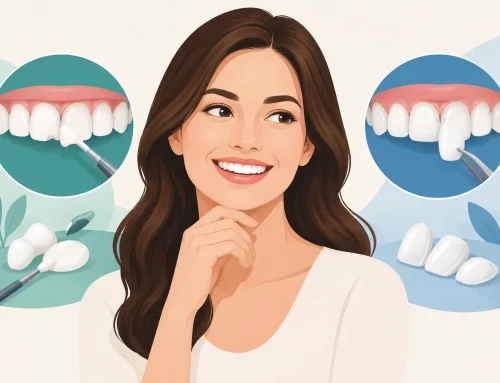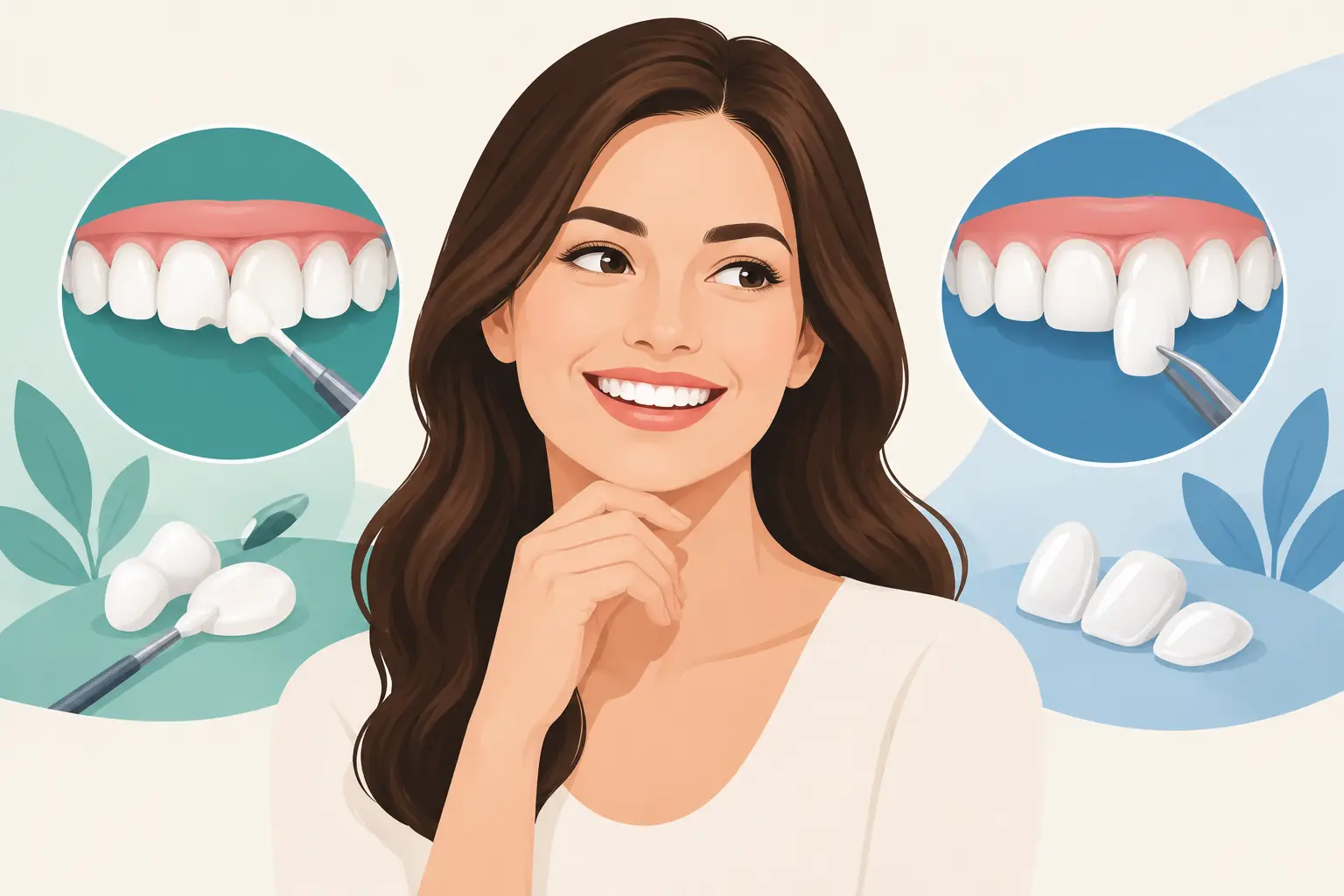
A small chip on a front tooth can change how freely you smile in photos, meetings, and everyday conversations. When patients ask about composite versus porcelain veneers, they are usually looking for more than a cosmetic fix. They want an option that looks natural, feels comfortable, protects their tooth structure, and fits their budget and lifestyle.
Both materials can create a beautiful smile when they are thoughtfully planned and carefully placed. The better choice depends on what you would like to change, the condition of your teeth and gums, your bite, and how long you want the result to last.
Composite Versus Porcelain Veneers: The Core Difference
Composite veneers are made from tooth-colored resin, the same family of material often used for cosmetic bonding and fillings. Your dentist applies and shapes the resin directly on the tooth, then hardens and polishes it. In many cases, composite veneers can be completed in one appointment.
Porcelain veneers are thin, custom-made ceramic shells created in a dental laboratory. After the teeth are prepared, the veneers are bonded to the front surfaces of the teeth at a later visit. Porcelain reflects light in a way that closely resembles natural enamel, which is one reason it is a popular choice for more extensive smile enhancement.
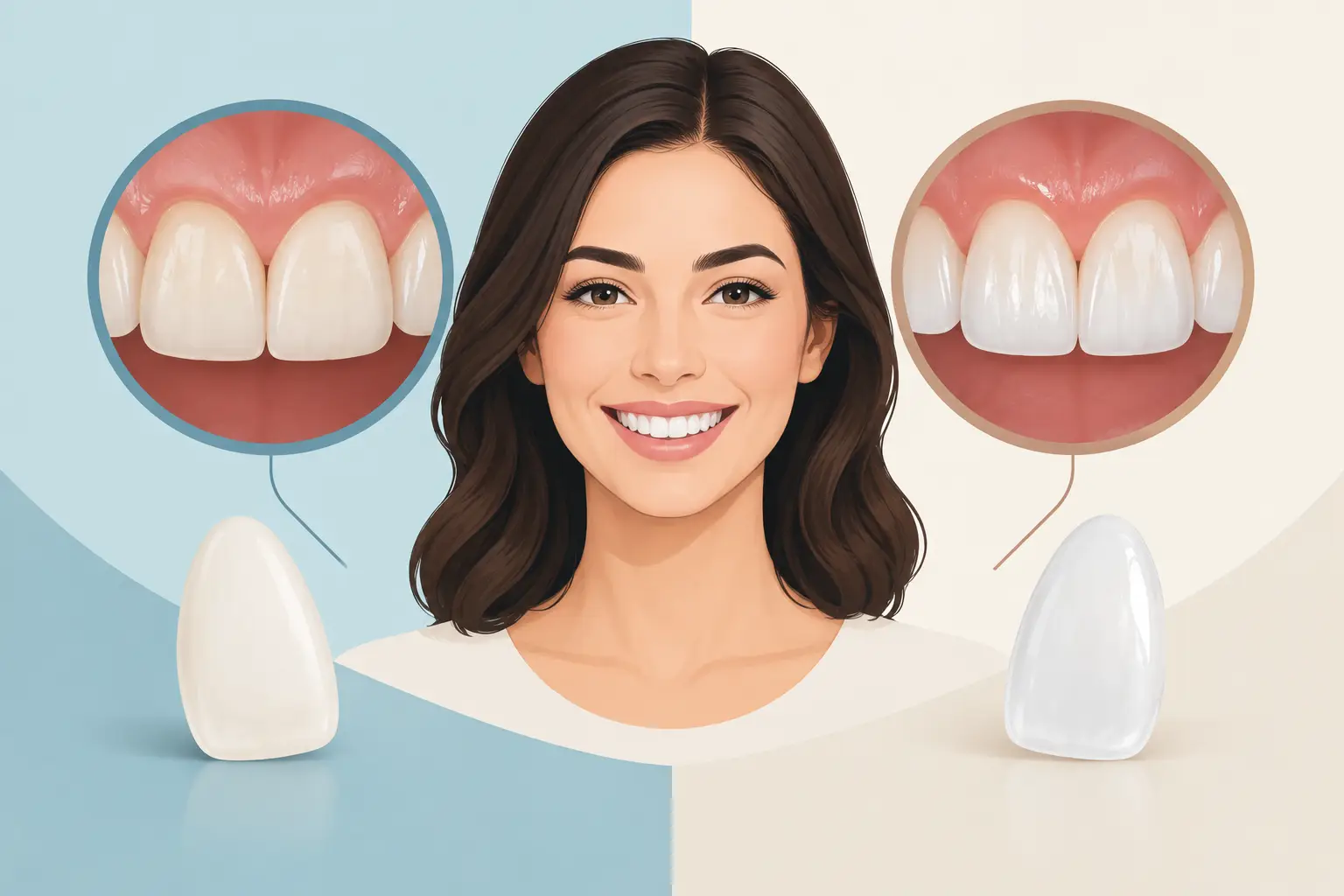
Neither option is automatically “best.” Composite can be an excellent, conservative solution for a minor concern. Porcelain can be a worthwhile investment when a patient wants greater stain resistance, strength, and long-term color stability.
When Composite Veneers Make Sense
Composite veneers are often a practical choice for patients with small cosmetic concerns. They can conceal slight chips, uneven edges, minor gaps, localized discoloration, or a tooth that is slightly smaller or differently shaped than its neighbors.
One advantage is that composite treatment commonly requires little to no removal of natural enamel. That conservative approach can be appealing when the tooth is otherwise healthy and the desired change is modest. Because the dentist sculpts the material directly, it can also be easier to make small adjustments during the visit.
Composite is generally less expensive upfront than porcelain. For someone who wants to improve one or two teeth, is planning a near-term event, or wants to begin with a lower-cost cosmetic option, that can make a meaningful difference.
There are trade-offs. Resin is more likely than porcelain to pick up stains from coffee, tea, red wine, tobacco, and deeply colored foods. It can also chip or wear over time, particularly for people who bite their nails, chew ice, or grind their teeth. Repairs are often straightforward, but composite veneers may need polishing, touch-ups, or replacement sooner than porcelain.
Why Patients Choose Porcelain Veneers
Porcelain veneers are often selected when a patient wants a more dramatic, durable change across several visible teeth. They can improve the appearance of persistent discoloration, worn enamel, uneven tooth shapes, small gaps, and teeth that appear slightly crooked without orthodontic treatment.
A well-designed porcelain veneer has a natural translucency that can make the smile look bright without looking artificial. Porcelain is also highly stain resistant. While natural teeth can still discolor over time, the color of porcelain tends to remain stable with normal care.
Durability is another major advantage. With good oral hygiene and routine dental care, porcelain veneers commonly last much longer than composite bonding. Still, they are not indestructible. Veneers can chip, crack, or come loose if they are exposed to heavy biting forces or trauma.
Porcelain treatment usually involves more planning and a higher initial investment. A small amount of enamel is often removed to create room for the veneer and help it sit naturally at the gumline. That preparation is generally irreversible, so it deserves careful consideration. Patients should also understand that veneers are a long-term commitment: if a prepared veneer eventually needs replacement, it is typically replaced with another veneer or a similar restoration.
Appearance, Cost, and Longevity
The right decision often becomes clearer when patients consider these three priorities together rather than focusing on one alone.
If your top priority is the most lifelike finish and lasting color stability, porcelain often has the advantage. It is particularly well suited for front teeth that show prominently when you smile. However, an attractive result is not only about the material. Shade selection, tooth proportions, gum health, facial features, and the dentist’s planning all matter.
If cost is the immediate concern, composite veneers usually have a lower starting cost. That does not necessarily make them less valuable. For the right case, conservative composite bonding can deliver a noticeable improvement with less treatment time. It is wise, though, to factor in possible future maintenance when comparing the total cost over several years.
If longevity is the deciding factor, porcelain commonly lasts longer with proper care. Composite can still serve patients well, especially when the treatment is limited to a small correction and the patient maintains regular hygiene visits. Your habits and bite can affect either option more than many people realize.
Your Bite and Gum Health Come First
Cosmetic treatment should begin with a healthy foundation. Active gum disease, untreated cavities, old failing fillings, or tooth pain should be addressed before veneers are considered. Healthy gums create a more attractive frame for the teeth and help support predictable, lasting results.
Your bite also matters. If you grind or clench your teeth, veneers may be exposed to forces that increase the chance of chips or fractures. A custom night guard can help protect a cosmetic investment. In some cases, orthodontic treatment such as Invisalign may be a better first step to improve tooth position and reduce the amount of reshaping needed for veneers.
Veneers are also not always the ideal answer for every dark tooth. A tooth that has changed color after trauma or root canal treatment may need a different approach to achieve a balanced result. A careful examination helps identify whether veneers, whitening, bonding, a crown, or a combination of treatments will best serve both appearance and oral health.
What the Treatment Process Feels Like
Composite veneers are often completed in a single visit. The tooth is cleaned and prepared, the composite is layered and shaped, and the final surface is polished. Patients can usually leave with an immediate improvement in their smile.
Porcelain veneers typically take two or more appointments. During the first visit, your dentist evaluates the smile, discusses goals, prepares the teeth as needed, and takes precise impressions or digital scans. Temporary veneers may be placed while the final porcelain veneers are crafted. At the placement appointment, each veneer is checked for fit, color, and comfort before it is bonded into place.
The goal should never be to create a generic “perfect” smile. The best cosmetic dentistry respects your facial features, the way you speak, the shape of your natural teeth, and the level of brightness that feels like you.
Caring for Either Type of Veneer
Both composite and porcelain veneers need the same basics: brush twice a day with a nonabrasive toothpaste, floss daily, and keep regular dental cleanings and exams. Veneers do not decay, but the natural tooth edges and gumline around them still can.
Avoid using your teeth as tools to open packages or hold objects. If you enjoy hard foods, use care with ice, hard candy, and unpopped popcorn kernels. If you notice a rough edge, a change in your bite, sensitivity, or a veneer that feels loose, schedule an evaluation promptly instead of waiting for the problem to worsen.
At Finesse Family Dental, veneer recommendations are based on the details of your smile, not a one-size-fits-all formula. A thoughtful consultation gives you the space to discuss what you want to change, what you are comfortable investing, and which option supports your oral health.
A confident smile should still feel like your smile. Whether a small composite enhancement or custom porcelain veneers are the better fit, choosing treatment after a careful exam can help you move forward with clarity and comfort.