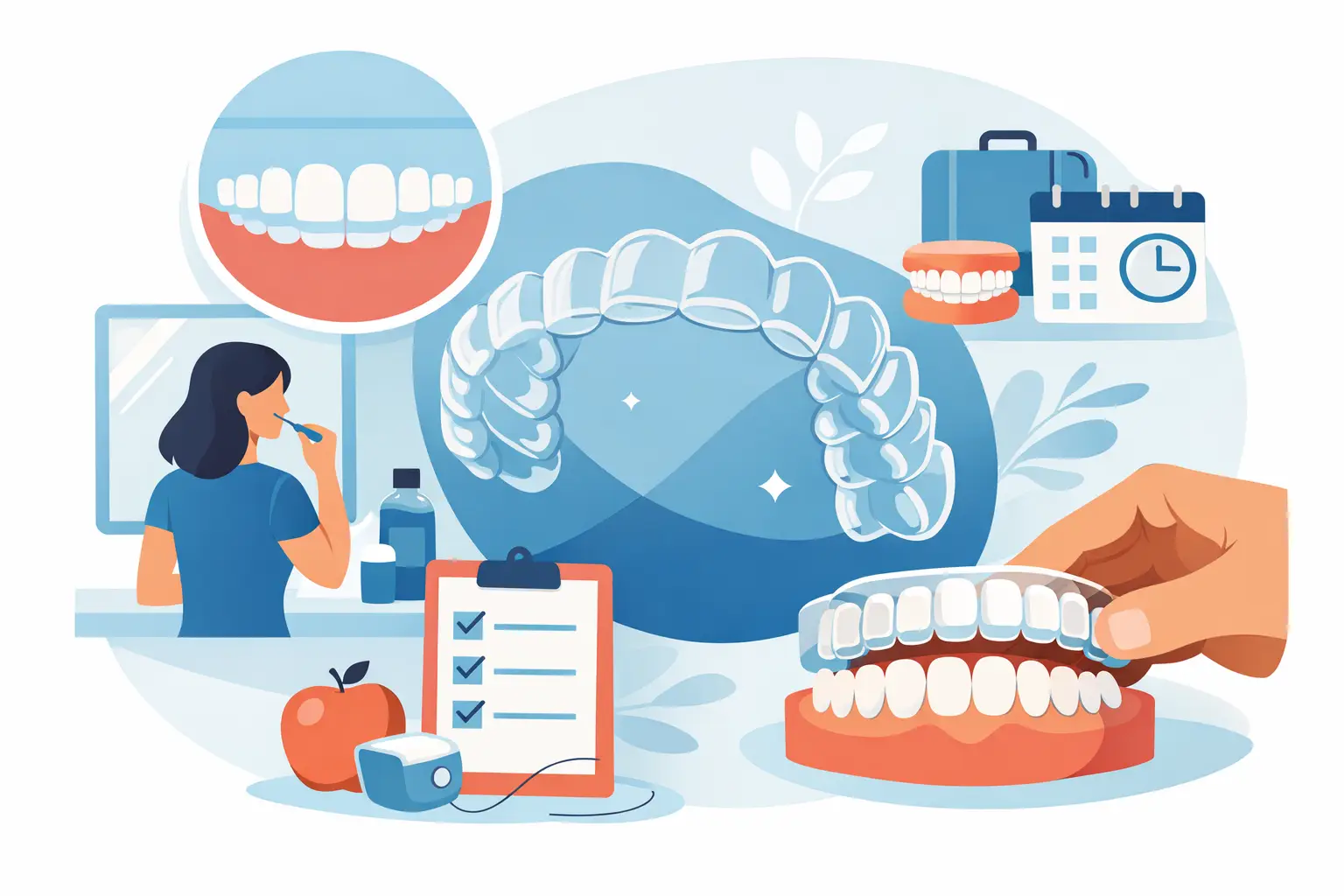
A great Invisalign experience begins before you receive your first set of clear aligners. Knowing how to prepare for Invisalign can help you feel more comfortable, protect your oral health, and make it easier to stay on track once treatment starts. For busy Fremont and East Bay patients, a little planning upfront can make the daily routine feel far more manageable.
Invisalign is designed to fit into real life, but it still requires consistency. Your aligners need to be worn for most of the day, removed for meals and most drinks, and cared for properly. Preparing your teeth, schedule, and expectations before treatment gives your smile the best foundation for healthy, predictable movement.
Start With a Complete Invisalign Consultation
The first step is a personal consultation with your dentist. This visit is about much more than deciding whether clear aligners look appealing. Your dentist will evaluate your bite, tooth alignment, gums, jaw comfort, and overall oral health to determine whether Invisalign is the right treatment for your goals.
Be ready to discuss what you would like to change about your smile. Perhaps you are concerned about crowding, gaps, a tooth that has shifted, or a bite that feels uneven. Clear goals help your dentist explain what treatment can realistically achieve and whether other dental care should happen first.
Digital scans, photographs, and X-rays may be used to create a detailed picture of your mouth. These records allow the dentist to plan tooth movement carefully and show you a preview of the expected result. They also reveal issues that may not be obvious when you look in the mirror, such as a cavity between teeth, gum inflammation, or an older restoration that needs attention.
Ask Questions That Affect Your Routine
Invisalign treatment is highly individualized, so the timeline and daily details can vary. Ask how long your case may take, how often you will change aligners, and how frequently you will need progress visits. It is also helpful to ask whether attachments, elastics, enamel reshaping, or retainers may be part of your plan.
Attachments are small, tooth-colored shapes bonded to certain teeth. They give the aligners a better grip for more precise movement. They are common and discreet, but they can make aligners feel snug when you first put them in. Knowing this beforehand helps prevent surprises.
Take Care of Dental Problems Before Aligners Begin
Teeth move best in a healthy mouth. Before starting Invisalign, your dentist may recommend a professional cleaning, treatment for cavities, or care for gum disease. These steps are not a delay for the sake of delay. They help protect your teeth and gums during orthodontic treatment.
Gum health matters especially because aligners cover your teeth for about 20 to 22 hours a day. If plaque and bacteria are trapped against inflamed gums, irritation can worsen. A cleaning and a renewed focus on home care can reduce this risk and give you a fresher start.
If you have crowns, bridges, implants, veneers, or dental fillings, bring them up during your consultation. Invisalign can often be planned around existing dental work, but each situation requires careful evaluation. In some cases, final cosmetic work is best completed after teeth have moved into their new positions.
Build a Strong Brushing and Flossing Routine
Clear aligners are nearly invisible, but they are not a substitute for oral hygiene. You will need to brush after eating whenever possible before placing your aligners back in your mouth. Flossing daily is equally valuable because food caught between teeth can contribute to decay and gum irritation.
If your current routine is rushed, start making small changes before treatment begins. Keep a travel toothbrush, toothpaste, floss, and aligner case in your bag, desk drawer, or car. Patients who prepare a simple kit ahead of time are less likely to put aligners back in after lunch without cleaning their teeth.
Avoid using hot water to rinse or clean aligners. Heat can warp the plastic and affect how they fit. A soft toothbrush, cool water, and an aligner-cleaning product recommended by your dental team are usually enough to keep them clear and fresh.
Prepare for the First Few Days of Invisalign
Your first aligners may feel tight, and your teeth may be tender for a day or two when beginning a new set. This pressure is generally a sign that the aligners are working as planned. Most patients adjust quickly, especially when they wear their aligners consistently rather than taking them out too often.
Consider beginning your first tray at a time when you have a lighter schedule. Starting in the evening can be convenient because you sleep through some of the initial adjustment period. Soft foods such as yogurt, eggs, soups, smoothies, rice, and cooked vegetables can be more comfortable if your teeth feel sensitive.
You may notice a slight change in your speech at first, particularly with words that contain an “s” sound. Reading aloud or having a few conversations with your aligners in can help your tongue adjust. For most people, this temporary change improves within several days.
Plan for Wear Time, Meals, and Travel
The success of Invisalign depends on wear time. Your dentist will give you specific instructions, but most patients should wear aligners 20 to 22 hours each day. That means the time out for breakfast, lunch, dinner, snacks, brushing, and flossing adds up faster than many people expect.
Before treatment starts, think honestly about your habits. If you sip coffee throughout the morning, snack at your desk, or frequently attend work lunches, you can still succeed with Invisalign. You simply need a plan. Drink water with aligners in, remove them for food and sugary or dark-colored beverages, and return them promptly after cleaning your teeth.
Always place aligners in their case when you remove them. Wrapping them in a napkin is one of the most common ways aligners are accidentally thrown away. Keep the case with you, and consider having a spare case in another frequently used bag.
Travel is also easier when you prepare in advance. Pack your current and next set of aligners, cleaning supplies, your case, and any chewies your dentist recommends. If you are away when it is time to switch trays, follow the schedule provided by your dental team rather than guessing.
Make Room in Your Calendar for Progress Visits
Invisalign often requires fewer office visits than traditional braces, but follow-up appointments remain essential. Your dentist checks that your teeth are tracking properly, evaluates your bite, and makes adjustments if needed. Missing visits can allow small concerns to become larger setbacks.
Put appointments into your calendar as soon as they are scheduled, especially if you balance work, school schedules, or family responsibilities. If an aligner cracks, becomes lost, or no longer fits properly, contact your dental office promptly. Do not move to the next tray early or return to an old tray without professional guidance.
For patients who want a comfortable, personalized orthodontic experience, Finesse Family Dental can coordinate Invisalign planning with the preventive and restorative care your smile may need along the way.
Understand That Retainers Are Part of the Plan
Preparing for Invisalign also means preparing for what comes after it. Teeth naturally have a tendency to shift over time, even after successful orthodontic treatment. Retainers help protect the result you worked for.
Ask about your retainer plan before treatment is complete, including how often you should wear retainers and how to care for them. Thinking of retainers as the final stage of treatment, rather than an optional extra, makes it easier to maintain your new smile for years.
Your aligners are a daily commitment, but they do not have to disrupt your life. Begin with a healthy mouth, keep your supplies close, and follow the plan your dentist creates for you. Each tray is a small, practical step toward a smile that feels more confident every time you see it.