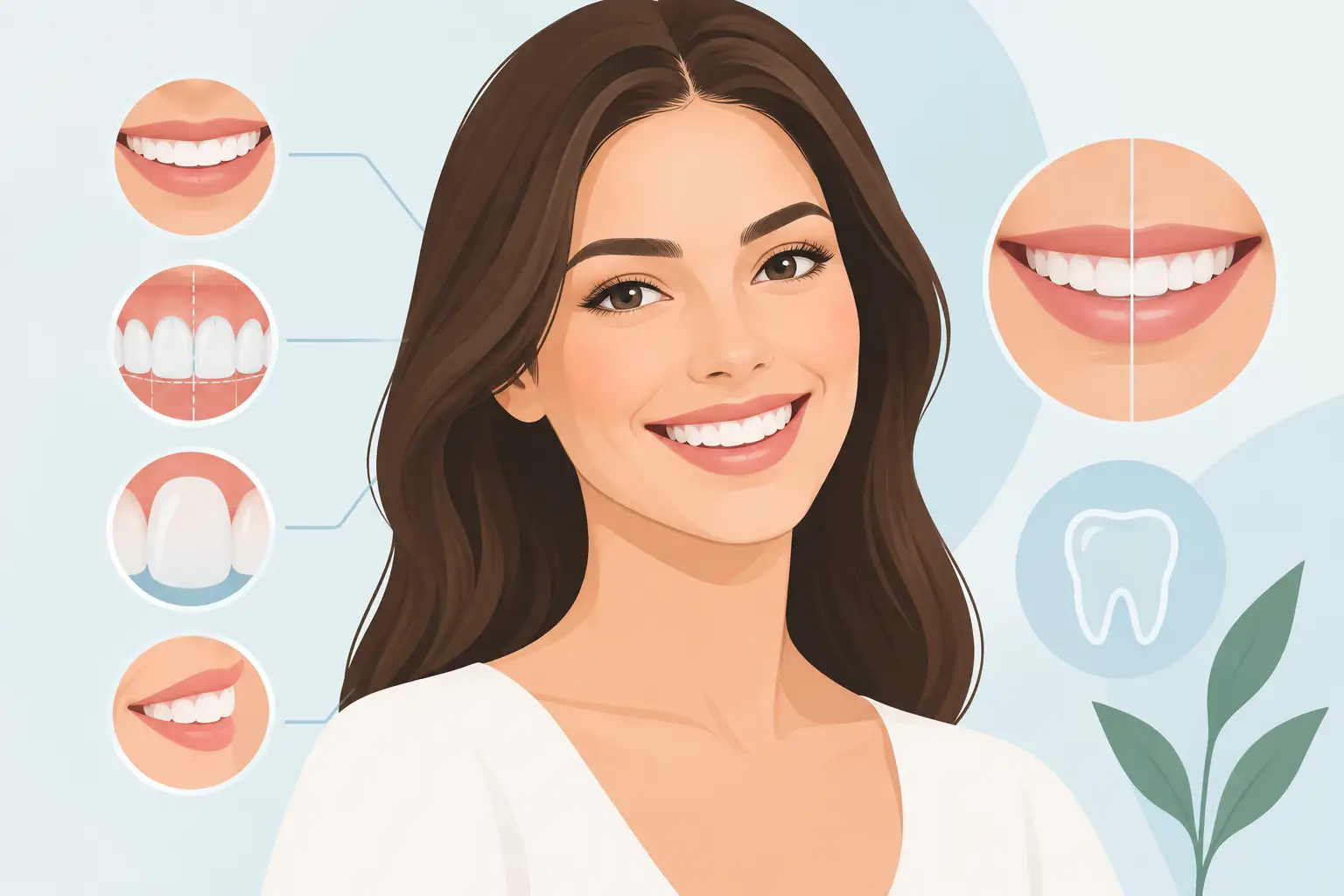
A beautiful smile should still look like your smile. The best smile design features do not create one identical, overly white look for every patient. They bring your teeth, gums, lips, facial proportions, bite, and personal goals into balance so your result feels natural, comfortable, and genuinely confidence-building.
For some people, smile design may mean whitening and a few small bonding improvements. For others, it may include veneers, Invisalign, crowns, gum contouring, or restorative care to rebuild worn or damaged teeth. The right approach depends on your oral health, your smile goals, and what will be dependable over time.
What Makes a Smile Design Look Its Best?
Smile design is the thoughtful planning of cosmetic and restorative treatments to improve the appearance and function of a smile. It is not just about making teeth brighter. A dentist considers how your teeth look when you speak and smile, whether your gums frame the teeth evenly, and whether your bite supports the result.
The most successful plans are customized. A very bright shade may suit one patient but look unnatural on another. Longer front teeth can create a more youthful appearance for some smiles, while they may look out of proportion on someone else. Careful planning helps avoid a result that looks artificial or feels uncomfortable.
1. Tooth Proportion and Shape
The size and shape of the front teeth have a major influence on the character of a smile. Teeth that are worn, chipped, uneven, or naturally short can make a smile appear older or less balanced. Restoring appropriate length and gentle contour can make a meaningful difference without changing your entire appearance.
Your dentist will consider the relationship between the central front teeth, the surrounding teeth, and your facial features. Generally, the two front teeth should be similar in length and shape, but natural smiles are not perfectly identical. Small variations often create warmth and realism.
Veneers, dental bonding, and crowns may be used to refine tooth shape. The best option depends on how much correction is needed, the strength of the tooth, your bite, and your long-term goals. Bonding is conservative and useful for minor changes, while veneers or crowns may provide more complete coverage when teeth are significantly worn, discolored, or damaged.
2. A Color That Looks Bright, Not Artificial
A healthy-looking smile is usually bright, but it does not have to be paper-white. Natural teeth have subtle color variation, and the right shade should complement your skin tone, lips, and overall appearance.
Professional whitening can be a good first step for teeth that are healthy but stained by coffee, tea, wine, tobacco, or normal aging. If you are considering veneers, crowns, or bonding, it is often wise to whiten first. That allows restorative materials to be matched to your preferred brighter shade.
Some discoloration cannot be fully corrected with whitening alone. Deep internal staining, old restorations, or uneven color may call for veneers or crowns instead. A dentist can help you weigh a conservative whitening plan against a more comprehensive cosmetic option, without pushing treatment that does not fit your needs.
3. Healthy, Even Gum Contours
Gums are part of every smile, especially when you laugh or smile broadly. Redness, swelling, recession, or an uneven gumline can distract from otherwise attractive teeth. This is why gum health is a foundation of cosmetic dentistry, not a separate concern.
For patients with gum disease, treatment should come before elective cosmetic work. Healthy gums help protect teeth, reduce inflammation, and create a more stable base for veneers, crowns, and implants. If gum contours are uneven or cover too much of the visible tooth surface, gentle gum reshaping may be considered when clinically appropriate.
The goal is not a perfectly straight gumline at all costs. It is a balanced frame for your teeth that supports a healthy, natural appearance. Your dentist should also account for the position of the bone and the health of surrounding tissues before recommending cosmetic gum treatment.
4. Straight Teeth and a Balanced Smile Line
A smile line describes the curve created by the edges of your upper front teeth. In many natural-looking smiles, that curve follows the contour of the lower lip. Teeth that are crowded, tilted, spaced, or unevenly positioned can interrupt this harmony.
Orthodontic treatment such as Invisalign can move teeth into healthier, more balanced positions. This may reduce the need for extensive reshaping or multiple veneers, making it a valuable option for patients who want a more conservative path. It also can make daily brushing and flossing easier when crowding is a concern.
That said, orthodontics requires time and consistent wear of aligners. For someone with minor cosmetic concerns who wants a quicker improvement, bonding or veneers may be more appropriate. A good smile design conversation makes the trade-offs clear rather than presenting one treatment as right for everyone.
5. Bite Function and Comfort
A smile is not truly well designed if it looks good but feels wrong when you chew. The way upper and lower teeth meet affects comfort, tooth wear, jaw strain, and the longevity of cosmetic work.
If you grind your teeth, have an uneven bite, or experience frequent chipping, those issues should be addressed during planning. Otherwise, a new veneer, crown, or bonding repair may be at greater risk of damage. In some cases, orthodontic treatment, restorative adjustments, or a nightguard may be recommended to protect your investment.
This is especially important for full mouth rehabilitation, where multiple teeth are restored. Careful bite planning helps create a result that is attractive, stable, and functional for everyday meals and conversation.
6. Natural Texture and Small Details
Natural teeth reflect light differently across their surfaces. They may have subtle translucency near the edges, gentle texture, and slight differences from one tooth to the next. High-quality cosmetic dentistry respects those details.
A smile that is too uniform in color, shape, and surface texture can appear flat. In contrast, carefully designed veneers, crowns, and bonding can reproduce the light-catching qualities of natural enamel. These details are often what make people notice that you look refreshed without immediately recognizing that you had dental work.
Photos, digital imaging, and temporary mock-ups can help patients preview major changes. They also give you a chance to discuss preferences before final restorations are completed. If you have a favorite old photo of your smile, bringing it to your consultation can be helpful.
7. Facial Balance and Lip Support
Teeth do more than fill the space inside your mouth. Their position and length can influence lip support and how your smile appears at rest. A smile design should consider your face as a whole, including how much tooth shows when you speak and how your lips move when you smile.
As teeth wear down over the years, the visible length of the front teeth can decrease. Restoring worn teeth may improve the appearance of the smile while also supporting proper bite function. However, adding length must be done thoughtfully. Too much change can affect speech or make teeth look oversized.
This is one reason personalized planning matters. What looks appealing in a photograph may not suit your facial proportions or feel comfortable in daily life.
8. A Plan That Protects Long-Term Oral Health
The best cosmetic result begins with a healthy foundation. Cavities, gum disease, cracked teeth, old leaking fillings, and missing teeth deserve attention before or alongside aesthetic treatment. Addressing these concerns helps your smile look better and function more reliably.
A comprehensive plan may include preventive cleanings, periodontal care, fillings, root canal treatment, crowns, implants, or replacement of older restorations before cosmetic finishing touches are added. Having these services coordinated in one dental office can make treatment easier to understand and more efficient for busy families and professionals.
After treatment, regular exams, hygiene visits, daily home care, and protective appliances when needed all help preserve the result. Cosmetic dentistry is an investment in confidence, but it should also support a healthier mouth for years ahead.
Choosing the Right Smile Design for You
Before moving forward, talk openly about what you would like to change and what you want to keep. Some patients want a dramatic transformation; others want a subtle refinement that friends and coworkers cannot quite place. Both are valid goals.
Ask how each option affects tooth structure, timing, maintenance, comfort, and future dental needs. At Finesse Family Dental, a smile design consultation can bring those details together with compassionate care and modern treatment planning, so you can make a decision that feels informed rather than rushed.
The most rewarding smile design is not the one that copies someone else’s teeth. It is the one that lets you smile, speak, eat, and show up in your community with greater ease.