A sharp jolt when you sip coffee, pain that wakes you during the night, or a throbbing tooth that will not settle down can make it hard to think about anything else. Tooth pain before root canal treatment is often a sign that the soft tissue inside a tooth is badly inflamed or infected. It deserves prompt attention, but it does not mean you need to panic. With a careful exam and gentle treatment, the goal is to relieve pain, protect your natural tooth, and help you get back to normal.
Why tooth pain before a root canal can feel so intense
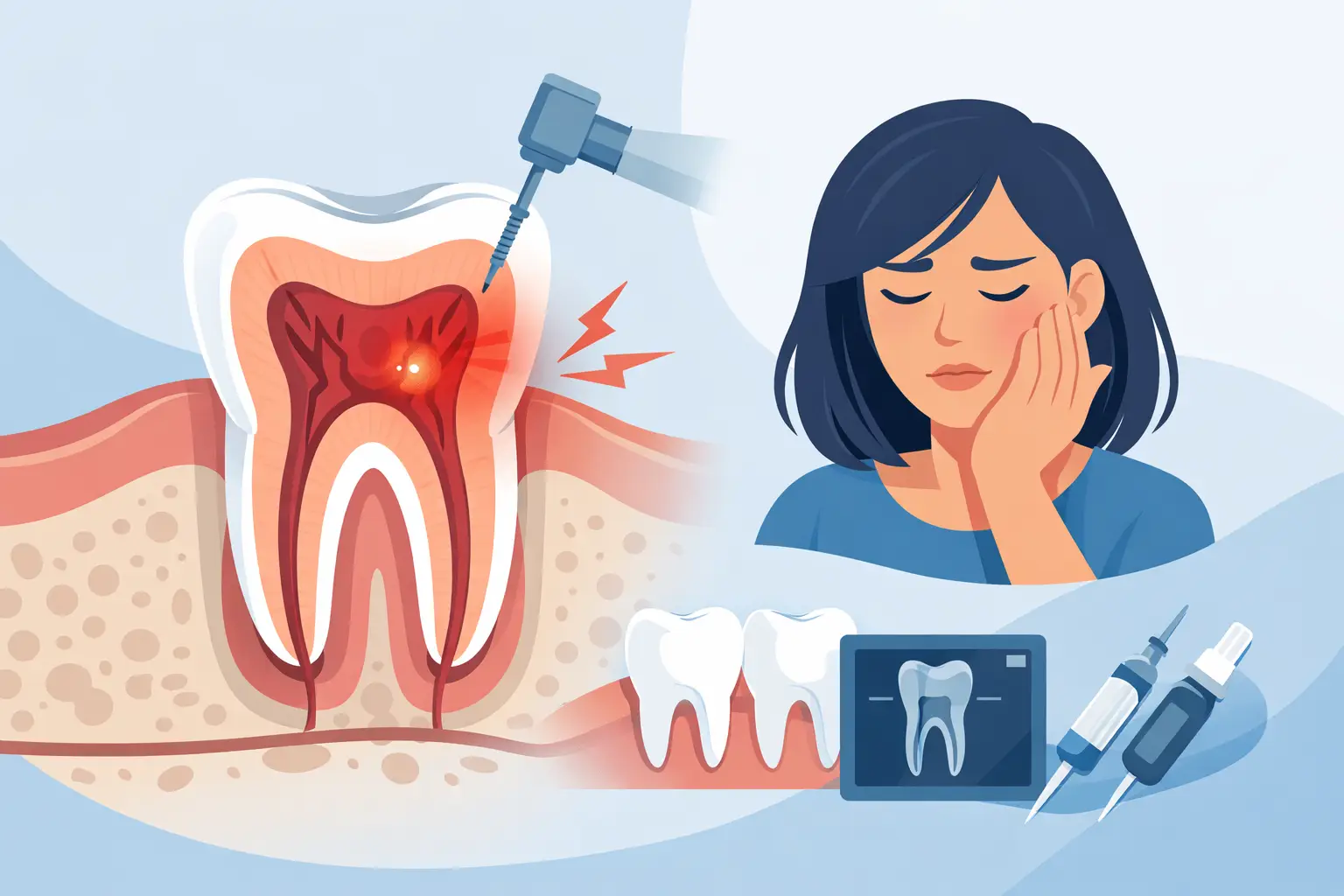
At the center of each tooth is the pulp, a small space containing nerves and blood vessels. A deep cavity, crack, repeated dental work, injury, or severe gum infection can allow bacteria to reach this tissue. Once the pulp becomes inflamed, pressure can build inside the tooth. That is why the pain may feel sudden, deep, and difficult to ignore.
Pain does not always follow one pattern. Some people feel a lingering ache after hot or cold foods. Others notice sharp sensitivity to sweets, pain when biting, or a steady throbbing that seems to spread into the jaw, ear, or temple. A tooth can also hurt more when lying down because of changes in blood flow and pressure.
When the pulp cannot heal on its own, root canal treatment removes the damaged tissue, cleans the inside of the tooth, and seals it to prevent further infection. The treatment is designed to stop the source of pain, not add to it.
Symptoms that may point to a root canal need
Only a dental examination and X-rays can confirm whether a root canal is the right treatment. Still, certain symptoms should prompt a call to your dentist. Persistent pain when chewing, sensitivity that lingers after a hot or cold drink, swelling near a tooth, or a small bump on the gum can all signal a problem inside the tooth.
You may also notice that one tooth feels higher than the others when you bite down. In some cases, the tooth becomes darker than surrounding teeth after an injury or internal damage. A cracked tooth can create similar symptoms, especially if pain appears when you release your bite.
There is one confusing possibility: pain can disappear even when the infection remains. If the pulp dies, the nerve may stop sending pain signals for a time. Bacteria can still spread beyond the root and cause swelling, bone loss, or an abscess. Relief without treatment is not always a sign that the tooth is better.
Not every toothache requires a root canal. A cavity, worn filling, gum inflammation, sinus pressure, jaw clenching, or a neighboring tooth can cause pain that feels similar. This is why an accurate diagnosis matters. Treating the correct tooth and the underlying cause helps avoid unnecessary treatment and gets you comfortable sooner.
When tooth pain is an urgent dental concern
A painful tooth should be evaluated as soon as possible, particularly when the discomfort is persistent or worsening. Call your dental office promptly if you have facial or gum swelling, a fever, trouble opening your mouth, a bad taste or drainage from the gum, or pain that prevents you from sleeping or eating normally.
Seek urgent medical care if swelling affects your eye, jaw, or neck, or if you have trouble breathing or swallowing. These symptoms can indicate that an infection is spreading and should never be managed by waiting it out.
For Fremont families, timely care can often mean the difference between saving a tooth with root canal treatment and facing a more complex problem later. A dentist can assess the area, reduce your discomfort, and explain the treatment options in clear terms.
How to manage discomfort before your appointment
Home care may make you more comfortable for a short time, but it cannot remove an infection inside the tooth. Avoid putting aspirin, alcohol, clove oil, or any medication directly on the tooth or gums. These substances can burn sensitive tissue and do not treat the cause of the pain.
Until you are seen, a few sensible steps may help:
- Use an over-the-counter pain reliever only as directed on the label, and check with your physician or pharmacist if you have medical conditions, take blood thinners, are pregnant, or are unsure which option is safe for you.
- Rinse gently with warm salt water to soothe irritated gums and keep the area clean.
- Choose softer foods and chew on the opposite side of your mouth. Avoid very hot, very cold, sugary, or hard foods if they trigger pain.
- Place a cold compress on the outside of your cheek for short intervals if there is tenderness or swelling.
Antibiotics are not a substitute for root canal treatment when the source of infection is inside the tooth. They may be appropriate in certain cases, such as spreading infection or significant swelling, but the tooth still needs direct dental care to resolve the problem.
What happens at a root canal visit
Many patients arrive expecting the procedure itself to be painful because they are already in severe discomfort. In reality, modern root canal treatment is typically performed with local anesthesia so the area is numb. For most people, the experience feels similar to having a filling placed, while the relief afterward can be significant.
Your dentist begins by reviewing your symptoms, examining the tooth, and taking any needed X-rays. Once the diagnosis is clear, treatment may be completed in one appointment or require more than one visit. It depends on the tooth, the complexity of its roots, the extent of infection, and whether swelling is present.
During treatment, a small opening is made in the tooth. The dentist removes inflamed or infected pulp, carefully cleans and shapes the root canals, then fills and seals them. A temporary filling may be used if another visit is needed. Because a root canal-treated tooth can become more brittle over time, a crown is often recommended for back teeth or teeth with substantial damage. The final restoration helps restore normal chewing strength and protect the tooth from fracture.
At Finesse Family Dental, patients can expect a treatment conversation that is straightforward and personal. Understanding what is happening, what it will feel like, and what comes next can make a stressful appointment feel far more manageable.
Do not wait for pain to become unbearable
Dental pain has a way of taking over meals, sleep, work, and family time. It can also lead people to delay care because they are worried about treatment. Yet early evaluation is usually the calmer, simpler path. A tooth that is treated before infection progresses may have a better chance of being restored comfortably and predictably.
If you are experiencing tooth pain before a root canal or suspect something is wrong, contact a dental office for an evaluation rather than trying to push through it. A caring team can identify the cause, explain whether root canal treatment is needed, and help you take the next step toward feeling like yourself again.