A small cavity can feel like a straightforward problem, but choosing how to restore it deserves more thought than many patients expect. This dental filling options guide explains the materials your dentist may recommend, what affects the decision, and how to choose a restoration that protects your tooth while fitting your comfort, appearance, and budget.
Dental Filling Options Guide: What Your Dentist Considers
A filling replaces tooth structure that has been damaged by decay, a small fracture, or wear. The goal is not simply to cover a hole. A well-designed filling should seal out bacteria, support the remaining tooth, restore a natural bite, and feel comfortable when you chew.
There is no single best filling material for every tooth or every patient. A small cavity on a front tooth calls for different priorities than a large area of decay on a back molar that absorbs heavy chewing pressure. Your dentist will look at the size and location of the cavity, the condition of the surrounding enamel, your bite, any teeth grinding, your cosmetic preferences, and the expected longevity of the restoration.
Sometimes the right answer is not a traditional filling at all. If too much tooth structure has been lost, a larger restoration such as an inlay, onlay, or crown may provide better long-term protection. Treating the tooth conservatively is valuable, but so is avoiding a filling that is too small to support the tooth safely.
Composite Resin Fillings
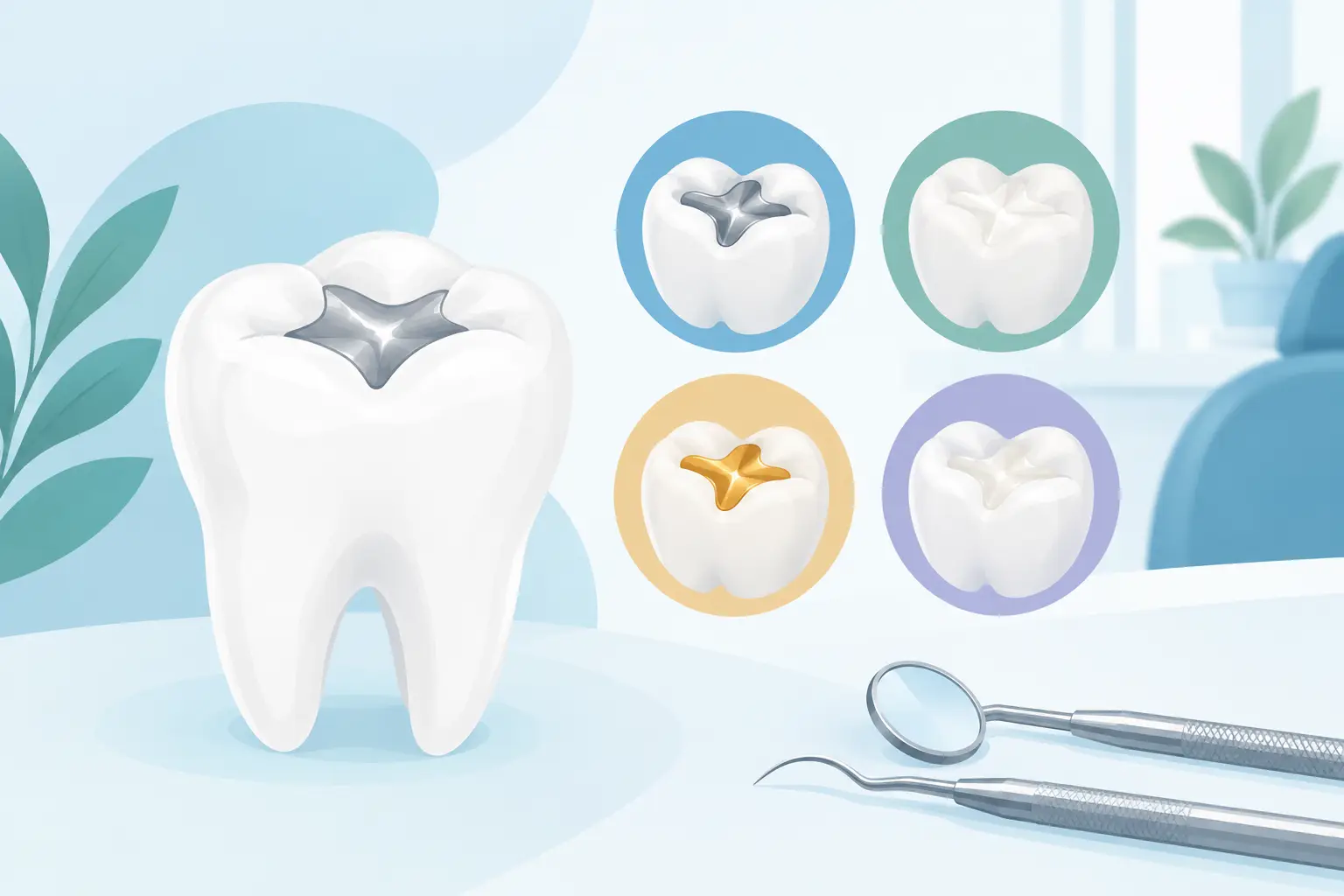
Composite resin is the tooth-colored filling material many patients picture when they think of modern dentistry. It can be color-matched closely to natural enamel, making it an especially popular choice for visible teeth. It is also commonly used in back teeth when a natural-looking result is a priority.
During placement, the dentist removes decay, prepares the tooth, places the composite in layers, and hardens each layer with a curing light. The material bonds to the tooth, which can allow for a conservative preparation and helps restore its shape.
Composite is a versatile and attractive option, but it is not indestructible. Larger composite fillings in high-pressure areas may wear, chip, or stain over time, particularly for patients who clench or grind their teeth. Good home care, regular exams, and a nightguard when appropriate can help protect these restorations.
Amalgam Fillings
Dental amalgam is a silver-colored material that has been used for decades, most often in back teeth. It has a long record of durability and can perform well in areas that experience strong chewing forces. It is generally less expensive than some tooth-colored alternatives and may be useful when keeping the treatment area completely dry is difficult.
Its most obvious drawback is appearance. Because amalgam does not match the tooth, many patients prefer other materials for visible areas. Amalgam also does not bond directly to the tooth in the same way composite does, so the preparation may require removal of more healthy tooth structure in some cases.
Amalgam is considered an appropriate option for many adults, but it may not be the preferred choice for certain higher-risk groups, including pregnant patients, nursing mothers, young children, and people with specific medical conditions. Your dentist can discuss current recommendations and whether another material better fits your needs.
Ceramic Fillings and Porcelain Inlays
Ceramic restorations, often made from porcelain, are custom-crafted outside the mouth and bonded into place. They are frequently called inlays or onlays rather than fillings because they are designed to precisely replace a larger damaged area of the tooth. An inlay fits within the cusps, or raised points, of a back tooth. An onlay covers one or more of those cusps when additional support is needed.
Porcelain offers excellent color stability and a natural appearance. It can be a strong choice for larger restorations, especially when a standard composite filling may not be enough. The trade-off is that ceramic treatment usually involves more than one step and costs more than a direct filling. It may be an investment worth making when it helps preserve a weakened tooth and prevents a larger problem later.
Gold Fillings and Inlays
Gold restorations are known for exceptional strength, precision, and longevity. They are gentle on opposing teeth and can last for many years with proper care. For a patient who values durability over a tooth-colored result, gold can still be an excellent restorative material.
Because gold is visible, more costly, and often requires laboratory fabrication, it is less common than composite or ceramic options. Still, it remains a thoughtful choice in the right clinical situation, particularly for posterior teeth where chewing forces are significant.
Glass Ionomer Fillings
Glass ionomer is a material that can release fluoride over time, which may help protect teeth that are especially prone to recurrent decay. Dentists may use it in areas with low chewing pressure, around the roots of teeth, or for certain pediatric applications.
It is not usually as wear-resistant as composite or ceramic, so it may not be the best long-term solution for a large chewing surface. Its value lies in specific situations where fluoride release and gentle bonding are more important than maximum strength.
How to Choose the Right Dental Filling Option
Start with the tooth itself. A very small cavity between front teeth may be restored beautifully with composite. A damaged molar with a broad old filling or cracks may need a ceramic onlay or crown instead of another large direct filling. Choosing based on material alone can overlook the more important question: how much healthy tooth remains?
Next, consider where the restoration will show. Tooth-colored materials are often preferred for front teeth and areas visible when you smile. Back teeth may place function first, although many patients still choose composite or ceramic for a natural appearance.
Your bite matters as well. If you grind your teeth, chew ice, or have strong bite forces, a restoration that looks perfect on day one may not be the one that lasts best without protection. Tell your dentist about jaw soreness, worn teeth, or a history of broken fillings. These details can influence both the material recommendation and whether a nightguard would help.
Cost and insurance coverage are valid parts of the conversation, too. Many PPO plans contribute toward fillings, but coverage can vary by material and by the size of the restoration. Your dental team can help you understand the treatment recommendation, expected out-of-pocket costs, and whether a more durable alternative may save you from repeated repairs.
What to Expect During a Filling Appointment
For most fillings, treatment can be completed in one visit. Your dentist numbs the area, removes decay or damaged material, cleans the tooth, and places the chosen restoration. With composite, careful isolation is particularly helpful because moisture can interfere with bonding. Once the filling is shaped and polished, your dentist checks your bite to make sure it feels balanced.
It is normal to have mild sensitivity to temperature or pressure for a short time after treatment, especially if the cavity was deep. The tooth and surrounding tissues have been through a procedure, and they may need time to settle. However, pain that worsens, lasts beyond a reasonable adjustment period, or appears when you bite should be reported promptly. A simple bite adjustment can sometimes resolve the issue, while deeper decay may require additional care.
When an Old Filling Needs Attention
Fillings do not last forever. They can wear down, chip, leak around the edges, or develop decay underneath. You may notice roughness, food catching between teeth, sensitivity, a dark line near the filling, or a change in how your bite feels. In many cases, there are no obvious symptoms, which is why routine exams and X-rays are so valuable.
Replacing an old filling is not always urgent, and not every discoloration means failure. Your dentist should explain what is seen, why treatment is or is not recommended now, and what could happen if the area is monitored. That clear, personal guidance helps you make a decision without feeling rushed.
At Finesse Family Dental, the right restoration begins with listening to your concerns and evaluating the whole tooth, not just the cavity. Whether you need a discreet tooth-colored filling or a stronger custom restoration, thoughtful care can help you leave with a healthier bite and more confidence in your smile.