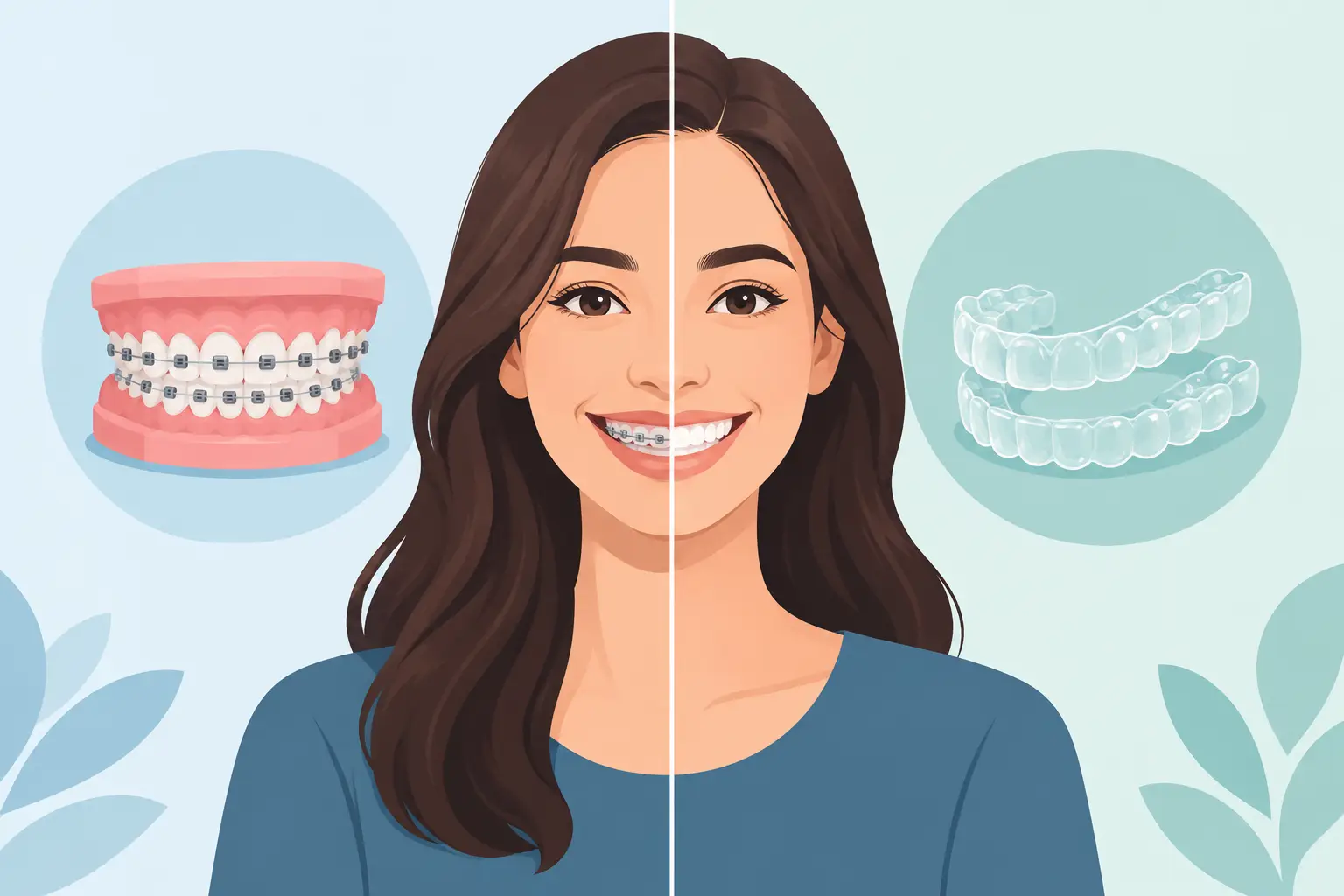
A wedding photo, a new job, a teenager starting high school, or a bite that has slowly become harder to clean can bring the same question to mind: braces or aligners? Both can create a healthier, more confident smile, but the best choice is not always the least noticeable option. It comes down to your teeth, your bite, your routine, and the type of treatment you can realistically follow every day.
At Finesse Family Dental, we believe orthodontic care should feel personal, not one-size-fits-all. A thoughtful evaluation helps identify the option that can move your teeth predictably while fitting comfortably into your life.
Braces or Aligners: Start With Your Treatment Goals
Braces and clear aligners both straighten teeth by applying gentle, controlled pressure over time. They can help correct crowding, gaps, crooked teeth, and certain bite concerns. The key difference is how that force is delivered and how much the appliance depends on the patient to keep treatment on track.
Traditional braces are attached to the teeth and remain in place throughout treatment. Brackets and wires give the dentist precise control over tooth movement. Because braces are always working, they can be especially effective for more complex cases, including significant crowding, teeth that need to rotate substantially, and some bite problems.
Clear aligners are custom-made trays that fit closely over the teeth. You wear each set for a prescribed period before moving to the next one. Since they are removable, aligners can be an appealing choice for adults and responsible teens who want a more discreet treatment option. They are often an excellent solution for mild to moderate alignment concerns, but successful results depend on wearing them consistently.
The most attractive choice is not automatically the right clinical choice. A careful exam, digital imaging, and a conversation about your goals help determine what will deliver a healthy, stable result.
When Braces May Be the Better Choice
Braces are reliable because there is no need to remember to put them back in after meals, sports, or brushing. For children and teens, that built-in consistency can make treatment easier to manage. Adults with complicated tooth movement may also benefit from the level of control braces provide.
Braces can be a strong recommendation when treatment requires more detailed bite correction or movement of teeth that are severely crowded, rotated, or positioned high in the gumline. They may also be a practical choice for someone who knows a removable appliance would be easy to misplace or forget.
That does not mean braces have to feel like a major disruption. Modern orthodontic treatment is designed with comfort and efficiency in mind. You will need periodic adjustment visits, and it can take a short time to get used to the feel of the brackets and wires. Temporary soreness after adjustments is normal and usually manageable with simple care.
Food choices require more attention with braces. Sticky candy, hard nuts, popcorn kernels, and crunchy foods that can damage brackets should be avoided. Careful brushing around the brackets and between the teeth is also essential. For patients who are willing to follow those instructions, braces can be a dependable path to a well-aligned smile.
Braces can be especially helpful for younger patients
Parents often worry about whether their child will be able to keep track of clear aligners. It is a valid concern. Lost trays, skipped wear time, and inconsistent routines can slow treatment. Since braces stay on the teeth, they remove one important responsibility from a busy child or teen’s day.
An orthodontic evaluation also considers jaw growth, permanent tooth development, and oral hygiene habits. In some cases, early guidance can make future treatment simpler. In others, waiting is the most appropriate plan. The goal is never to begin treatment too soon. It is to intervene at the time that gives your child the best opportunity for a healthy bite.
When Clear Aligners May Be the Better Fit
Clear aligners are popular for a reason: they are subtle, comfortable, and removable. Many working professionals and image-conscious adults appreciate being able to smile, speak, and attend meetings without visible brackets. Patients can take aligners out for meals and brush and floss normally, which makes daily oral hygiene more familiar.
For the right case, Invisalign treatment can address crowded teeth, spacing, and many mild to moderate bite concerns without changing the way you eat. It can be particularly convenient for patients who want flexibility for professional events, family photos, or special occasions.
The trade-off is commitment. Aligners are generally worn about 20 to 22 hours a day. Taking them out only for meals, drinks other than water, brushing, and flossing keeps treatment moving as planned. Wearing them only at night or leaving them out for long lunches can delay progress and affect results.
Aligners must also be cleaned daily. Rinse them when removing them, brush them gently with a soft toothbrush, and store them in their case rather than wrapping them in a napkin. That small habit prevents many expensive and frustrating losses.
Clear does not mean maintenance-free
Some patients assume aligners require less care than braces. They require different care. Teeth should be brushed before trays go back in, especially after meals, because food particles and sugar can be held against the teeth. Regular cleanings and exams remain important throughout orthodontic treatment.
Patients with untreated cavities, active gum disease, or significant inflammation may need dental care before starting aligners. Straightening teeth is most successful when the gums and supporting bone are healthy. Addressing those concerns first protects your investment and supports a more comfortable treatment experience.
Comfort, Treatment Time, and Cost
Most patients want to know which option works faster. The honest answer is that treatment time varies. A simple spacing concern may take months, while comprehensive bite correction can take longer. The complexity of your case, how your teeth respond, and how closely you follow instructions all matter more than a general timeline.
Both braces and aligners can cause pressure when teeth begin to move. This is usually a sign that treatment is working, not a sign that something is wrong. Braces may cause occasional irritation from a bracket or wire, while aligners can feel tight for the first day or two with a new set of trays. Your dental team can provide practical ways to manage either experience.
Cost also depends on the treatment plan. A straightforward alignment case may be less involved than a plan that requires detailed bite correction, attachments, or extended monitoring. Insurance benefits can vary, so it is helpful to review your coverage and payment options before beginning. Choosing based on price alone can lead to disappointment if the option does not address the real issue.
Your Daily Routine Matters More Than You Think
The right treatment should work with your real life. If you play a wind instrument, compete in contact sports, travel often for work, or have a demanding school schedule, bring that up during your consultation. These details can influence the best recommendation.
For example, someone who snacks frequently or drinks coffee throughout the day may find aligner wear more challenging because trays need to be removed and teeth cleaned before reinserting them. Someone who prefers not to restrict favorite foods may lean toward aligners. A patient who wants the security of a fixed appliance may feel more confident with braces.
There is no prize for choosing the option that looks best on paper. The best choice is the one that treats your needs effectively and that you can maintain from the first appointment through retention.
Do Not Forget the Retainer
Whether you choose braces or aligners, the final stage matters just as much as straightening. Teeth naturally have a tendency to shift over time. Retainers help protect the progress you worked hard to achieve.
Your dentist will explain when and how to wear your retainer based on your individual treatment. For many patients, wearing a retainer as directed becomes a simple part of their nighttime routine. It is one of the easiest ways to preserve the smile you invested in for years to come.
A comfortable, well-planned orthodontic experience begins with an honest conversation about what you want to change and what your smile needs to stay healthy. Whether braces or aligners are the better fit, the right guidance can make each step feel clear, manageable, and worth it.