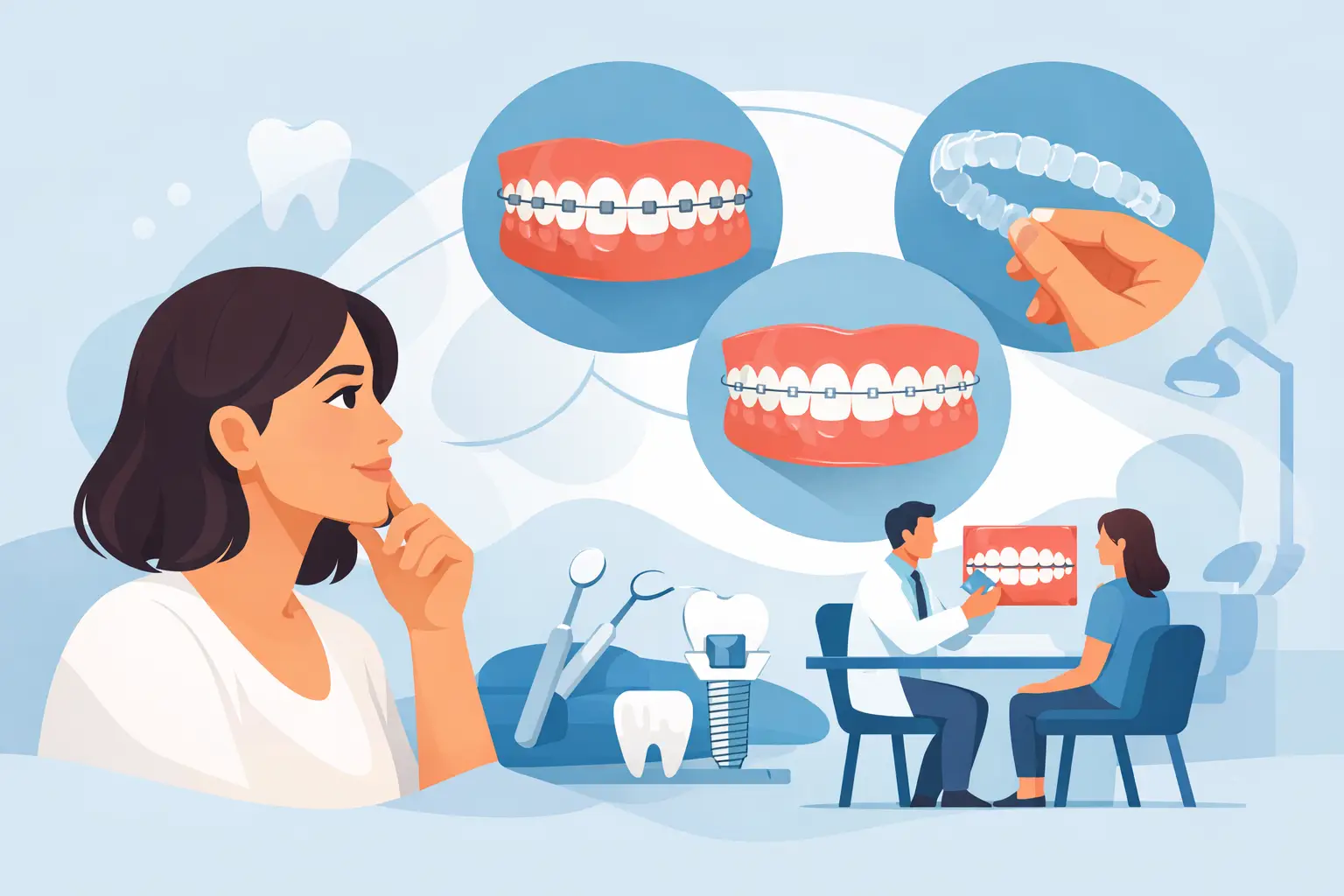
A crowded lower tooth, a shifting bite, or a smile you have hidden in photos for years can feel more noticeable as an adult. The good news is that adult orthodontic treatment options are more discreet, comfortable, and personalized than many people expect. Treatment is not just about straighter teeth, either. Proper alignment can make teeth easier to clean, improve bite function, and support a smile that feels more like you.
At Finesse Family Dental, orthodontic care begins with listening to what you want to change, evaluating your oral health, and building a plan around your lifestyle. Whether you are preparing for a milestone, replacing older dental work, or simply ready to address a concern you have put off, the right choice depends on your teeth, bite, goals, and timeline.
Why Adults Choose Orthodontic Treatment
Teeth can shift at any age. Natural changes in the jaw, past orthodontic treatment without consistent retainer use, tooth loss, grinding, and uneven bite pressure may all contribute to crowding or spacing over time. Some adults also reach a point where they want to correct a long-standing concern they did not have the opportunity to address earlier.
Appearance is often part of the decision, and that is completely valid. A straighter smile can help many people feel more confident at work, in social settings, and in photographs. But orthodontic treatment can have practical benefits as well. Crowded or overlapping teeth can create places where plaque is harder to remove. A bite that does not come together properly may contribute to uneven tooth wear, chipped edges, or stress on certain teeth.
Orthodontics is not a one-size-fits-all cosmetic service. A careful exam helps determine whether tooth movement is appropriate and whether other needs, such as gum treatment, fillings, crowns, or restorative planning, should be addressed first.
Adult Orthodontic Treatment Options to Consider
The best treatment is the one that can predictably achieve your goals while fitting realistically into your daily routine. For many adults, clear aligners are an appealing choice, but traditional braces remain an excellent solution in the right situation.
Clear aligners
Clear aligners use a series of custom, removable trays that gradually guide teeth into better positions. Because the trays are transparent and fit closely over the teeth, they are a popular choice for adults who prefer a subtle appearance. Invisalign treatment is one example of this approach.
Aligners are removed for meals and for brushing and flossing, which can make oral hygiene feel simpler than it does with fixed braces. They are also generally smooth, with no brackets or wires against the cheeks. For working professionals and busy parents, that flexibility can be a major advantage.
The trade-off is commitment. Aligners must be worn for the recommended number of hours each day, typically about 20 to 22 hours, to keep treatment on schedule. Taking them out frequently or forgetting to put them back in can slow progress. They may be a strong fit for mild to moderate crowding, spacing, and certain bite concerns, but suitability depends on the complexity of tooth movement needed.
Traditional braces
Traditional braces use brackets and wires to apply steady, controlled pressure to the teeth. They are fixed in place, so they work around the clock without relying on the patient to remember to wear them. For more complex alignment needs or significant bite correction, braces can provide a high level of control.
Adults sometimes assume braces are only for teenagers, but they remain a trusted and effective treatment option for patients of all ages. Modern braces are more streamlined than many people remember, though they are still more visible than clear aligners.
Braces do require some changes in routine. Certain hard, sticky, or chewy foods can damage brackets or wires, and brushing around orthodontic hardware takes extra attention. Regular adjustment appointments are also part of treatment. For patients who want a fixed solution or need correction that aligners may not manage as predictably, those trade-offs can be well worth it.
Limited orthodontic treatment
Not every adult needs full treatment of both arches. In some cases, a patient may be concerned mainly about a few front teeth that have shifted or a small gap that affects the smile. Limited treatment may focus on a specific area and can sometimes be completed more quickly than comprehensive orthodontics.
However, cosmetic movement must still respect the bite. Straightening only the visible teeth may not be the best choice if it creates instability or leaves underlying bite issues unaddressed. An exam and digital planning help clarify whether limited treatment is appropriate or whether a more complete approach will provide a healthier long-term result.
Orthodontics before cosmetic or restorative dentistry
Sometimes moving teeth first allows for more conservative cosmetic or restorative treatment later. For example, orthodontics may create a better space for an implant, help position teeth before a bridge, or improve alignment before veneers or crowns are considered. It can also make it easier to achieve balanced, natural-looking results with less alteration to healthy tooth structure.
This is especially valuable when several dental needs overlap. A comprehensive practice can look at the relationship between alignment, gum health, tooth condition, and appearance rather than treating each concern in isolation.
What Happens Before Treatment Begins
A successful result starts with a healthy foundation. Your dentist will examine your teeth, gums, bite, and jaw function, often using digital imaging and impressions or scans to understand the current position of your teeth. You will discuss the changes you would like to see, whether that means closing spaces, reducing crowding, improving a crossbite, or making your smile more even.
Gum health deserves special attention. Active gum disease should be treated before teeth are moved, since orthodontic treatment is safest when the supporting bone and gums are stable. Cavities, broken teeth, and other urgent concerns may also need care first.
The planning conversation should be practical, not pressured. Ask how long treatment may take, how often appointments are needed, what daily care will involve, and what kind of retainers will be recommended afterward. If clear aligners are being considered, be honest about whether you can consistently wear them as directed. The most convenient option on paper is not always the best fit for your habits.
How Long Does Adult Orthodontic Treatment Take?
Treatment time varies widely. Small cosmetic adjustments may take several months, while comprehensive treatment can take 12 to 24 months or longer. The starting position of your teeth, the complexity of your bite, the type of treatment used, and your consistency with appointments or aligner wear all affect the timeline.
Adults can absolutely move teeth successfully, but treatment may require thoughtful planning because adult teeth and gums often have more dental history behind them. Existing crowns, implants, gum recession, missing teeth, or past dental work do not automatically rule out orthodontics. They simply need to be considered carefully in the plan.
A reliable timeline is one based on your actual needs, not a promise that sounds fast. Careful monitoring helps keep treatment moving in the right direction while protecting the health of your teeth and gums.
Retainers Protect the Results You Worked For
Orthodontic treatment does not end the day aligners or braces come off. Teeth have a natural tendency to shift, particularly in the lower front area. A retainer helps hold your teeth in their new positions while the surrounding tissues adapt.
Your dentist will recommend a retainer schedule based on your case. Some patients begin with full-time wear and transition to nighttime wear, while others may need a different approach. The key is consistency. Wearing a retainer is a small habit that protects the time, effort, and investment you put into your smile.
Choosing the Right Path for Your Smile
Clear aligners, braces, and limited treatment each have real advantages. The right option is not necessarily the least visible or the fastest. It is the option that accounts for your bite, oral health, daily responsibilities, and the changes you want to see.
If you have been thinking about straighter teeth but are unsure where to start, a personal consultation can replace uncertainty with a clear plan. A healthy, comfortable smile is not reserved for adolescence, and the first step can be as simple as having a conversation about what is possible.