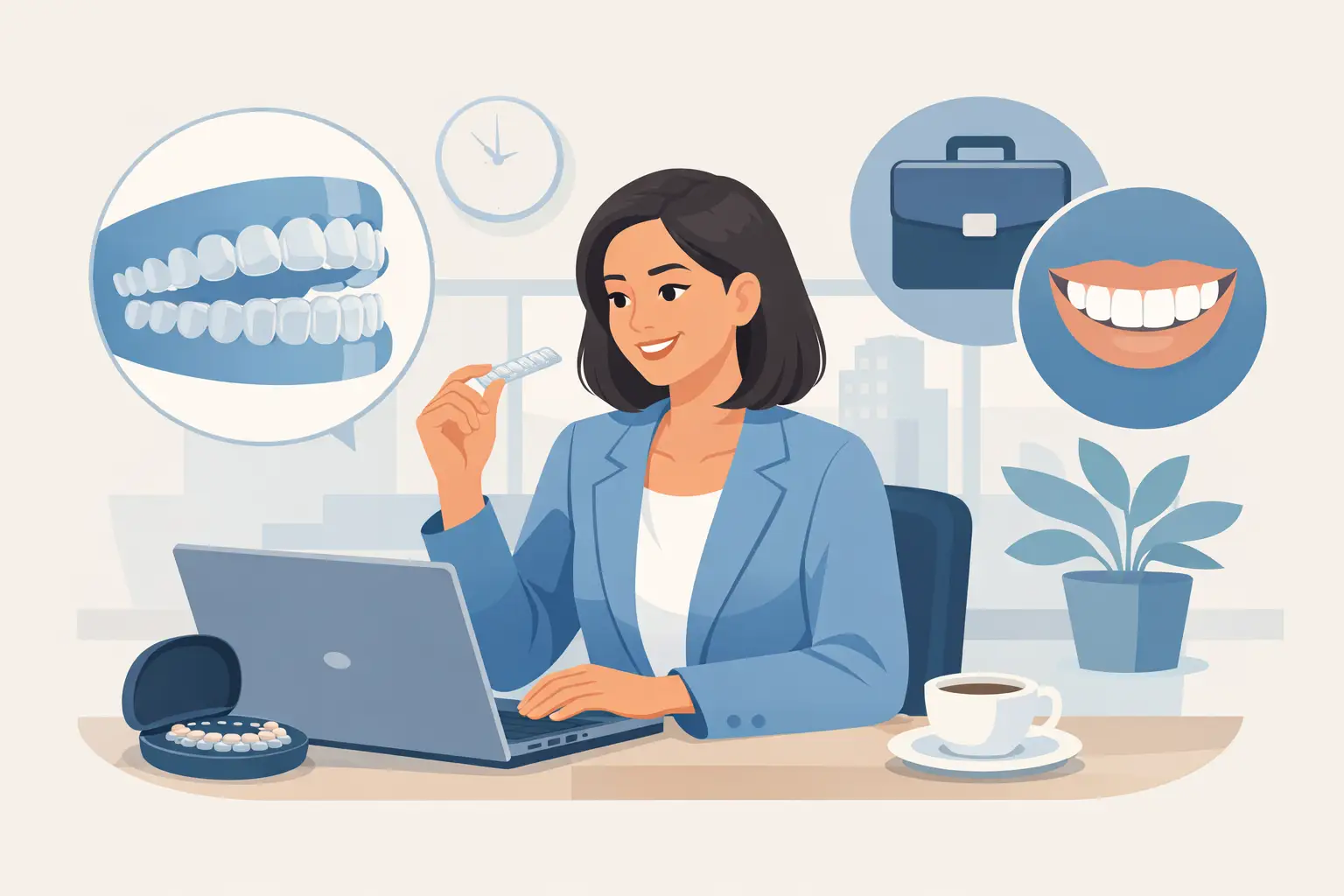
A client lunch, a presentation, a video call, then an evening workout: many professionals do not have much room in their schedule for orthodontic appointments or a treatment that changes how they feel when they smile. Invisalign for working adults can be a practical option because the clear aligners are designed to fit into daily life while gradually moving teeth into healthier positions.
For the right patient, treatment can improve more than appearance. Crowded or misaligned teeth may be harder to brush and floss thoroughly, may wear unevenly, or can affect the way the bite feels. The key is choosing treatment with a clear understanding of the commitment involved. Clear aligners are discreet, but they are not effortless.
Why clear aligners appeal to busy professionals
The most obvious difference between Invisalign and traditional braces is visibility. The aligners are made from clear, smooth plastic and fit closely over the teeth. In normal conversation, most people will not notice them. That can matter for professionals who spend their days meeting with customers, leading teams, interviewing, teaching, or appearing on camera.
They are also removable. You can take aligners out for meals, coffee, brushing, flossing, and certain important occasions. This makes food choices simpler than with braces, which often come with restrictions around sticky, hard, or crunchy foods. It also means you can maintain your normal oral hygiene routine without cleaning around brackets and wires.
For many adults, convenience is just as meaningful as discretion. Invisalign visits are often scheduled several weeks apart, depending on the treatment plan and how consistently the aligners are worn. At Finesse Family Dental, the goal is to make every visit purposeful, with personalized treatment planning and efficient follow-up care that respects your time.
Invisalign for working adults requires consistency
Clear aligners work only when they are in the mouth. Most patients need to wear them about 20 to 22 hours each day, changing to the next set on the schedule provided by their dentist. Taking them out briefly for meals and oral hygiene is expected. Leaving them out for long lunches, frequent snacking, or an entire evening event can slow progress.
This is the trade-off adults should consider honestly. Braces are fixed in place, so they keep working regardless of a busy day. Invisalign gives you more flexibility, but it also asks for more personal follow-through. People who enjoy routines often do very well with aligners. If you are likely to misplace a retainer, forget to put it back after coffee, or travel constantly without a system, fixed orthodontics may sometimes be the better choice.
A few small habits can make aligner wear easier at work. Keep the case with you rather than wrapping aligners in a napkin, which is a common way they get thrown away. Rinse them whenever you remove them, brush before reinserting them after meals when possible, and use a phone reminder during the first few weeks. These simple steps protect both your treatment timeline and your dental health.
What treatment can and cannot address
Invisalign can treat many common orthodontic concerns, including mild to moderate crowding, gaps, certain bite problems, and teeth that have shifted after previous braces. Adults who had orthodontic treatment years ago often choose aligners to correct relapse and restore a more even smile.
However, a clear aligner consultation should never be based on appearance alone. Some tooth movements are more complex than others. Significant jaw discrepancies, severely rotated teeth, advanced gum disease, untreated cavities, or certain bite concerns may require additional treatment or a different orthodontic approach. In some cases, traditional braces provide more predictable control.
Your dentist will evaluate your teeth, gums, bite, jaw function, and overall oral health before recommending Invisalign. Digital scans and treatment planning can help show the expected movement and estimated treatment sequence. This evaluation is valuable because a healthy foundation comes first. Straightening teeth without addressing active decay or periodontal disease can create bigger problems later.
Attachments and refinements are normal
The term “clear aligners” can make treatment sound invisible from start to finish, but a realistic plan may include small tooth-colored attachments. These are bonded to selected teeth and give the aligners something to grip as they guide more precise movements. They are generally subtle, though they may be visible up close.
Some patients also need minor reshaping between teeth to create space, or refinements near the end of treatment to fine-tune the result. Neither automatically means treatment has gone wrong. Teeth respond differently from person to person, and refinements can be part of achieving a result that looks natural and functions well.
Planning for meetings, meals, and travel
Most adults adjust quickly to speaking with aligners in. A slight lisp can occur during the first few days with a new set, particularly with certain sounds, but it usually improves as your mouth adapts. If you have a major presentation coming up, begin practicing aloud before the event rather than removing aligners for hours at a time.
For coffee drinkers, the practical approach is to remove aligners for hot coffee and rinse before putting them back in. Water is the safest drink while wearing them. Dark beverages, sugary drinks, and smoking can stain aligners or trap sugar against the teeth. If your workday involves frequent sipping, consolidate drinks and snacks when you can instead of repeatedly extending the time aligners are out.
Travel is manageable with a little preparation. Bring your current and next aligner sets, your case, a travel toothbrush, floss, and cleaning supplies. Keep aligners in your carry-on rather than checked luggage. If you lose or damage a tray, contact your dental office promptly for guidance. Do not decide on your own to skip ahead to a future tray unless instructed to do so.
Comfort, timing, and cost considerations
Most patients describe Invisalign as pressure rather than pain. Each new aligner may feel snug for a day or two, which is a sign that it is actively moving teeth. Smooth edges can also be more comfortable against the cheeks and lips than metal brackets, although every orthodontic option has an adjustment period.
Treatment time varies widely. A minor alignment concern may take several months, while more comprehensive bite correction can take 12 to 18 months or longer. The most accurate estimate comes after a full examination, because the amount of movement, your wear habits, and the need for refinements all affect timing.
Cost also depends on case complexity and the number of aligners required. Many dental insurance plans offer orthodontic benefits, although coverage and age limits differ. Ask your dental team to review your PPO benefits, expected out-of-pocket costs, and available payment options before treatment begins. A clear financial conversation makes it easier to choose care confidently rather than delaying a decision over uncertainty.
Retainers protect the result you worked for
Finishing Invisalign is not the end of orthodontic care. Teeth can naturally shift throughout adulthood, especially in the lower front teeth. Retainers hold your teeth in their new positions while the surrounding bone and tissues stabilize.
Your dentist will provide instructions for retainer wear, which may begin with full-time use and transition to nighttime wear. Treat this step as part of the treatment, not an optional extra. Adults who wear retainers consistently are far more likely to preserve the smile they invested time and attention in creating.
Questions to ask at your consultation
A worthwhile consultation should leave you with a realistic picture of what treatment involves. Ask whether Invisalign is the best option for your specific bite, how long treatment is expected to take, and how frequently you will need appointments. You may also want to ask whether attachments, enamel reshaping, refinements, or retainers are likely to be part of your plan.
It is equally reasonable to discuss your work schedule, travel demands, and any upcoming events. A dentist who understands your day-to-day routine can help you plan for success rather than handing you a generic timeline.
A straighter smile should fit your life, not add unnecessary stress to it. If you are ready to explore a discreet orthodontic option, a personal Invisalign consultation can give you clear answers and a treatment plan built around your health, confidence, and schedule.