A brighter smile can make you feel more comfortable in photos, meetings, and everyday conversations. But when comparing veneers vs teeth whitening, the best choice is not always the treatment that creates the biggest visual change. It is the one that addresses what is actually affecting your smile – whether that is surface staining, tooth color, worn enamel, uneven shape, or a combination of concerns.
At a cosmetic consultation, the goal is not to sell a one-size-fits-all solution. It is to understand your teeth, gums, habits, goals, and comfort level, then recommend an approach that looks natural and supports long-term oral health.
Veneers vs Teeth Whitening: The Key Difference
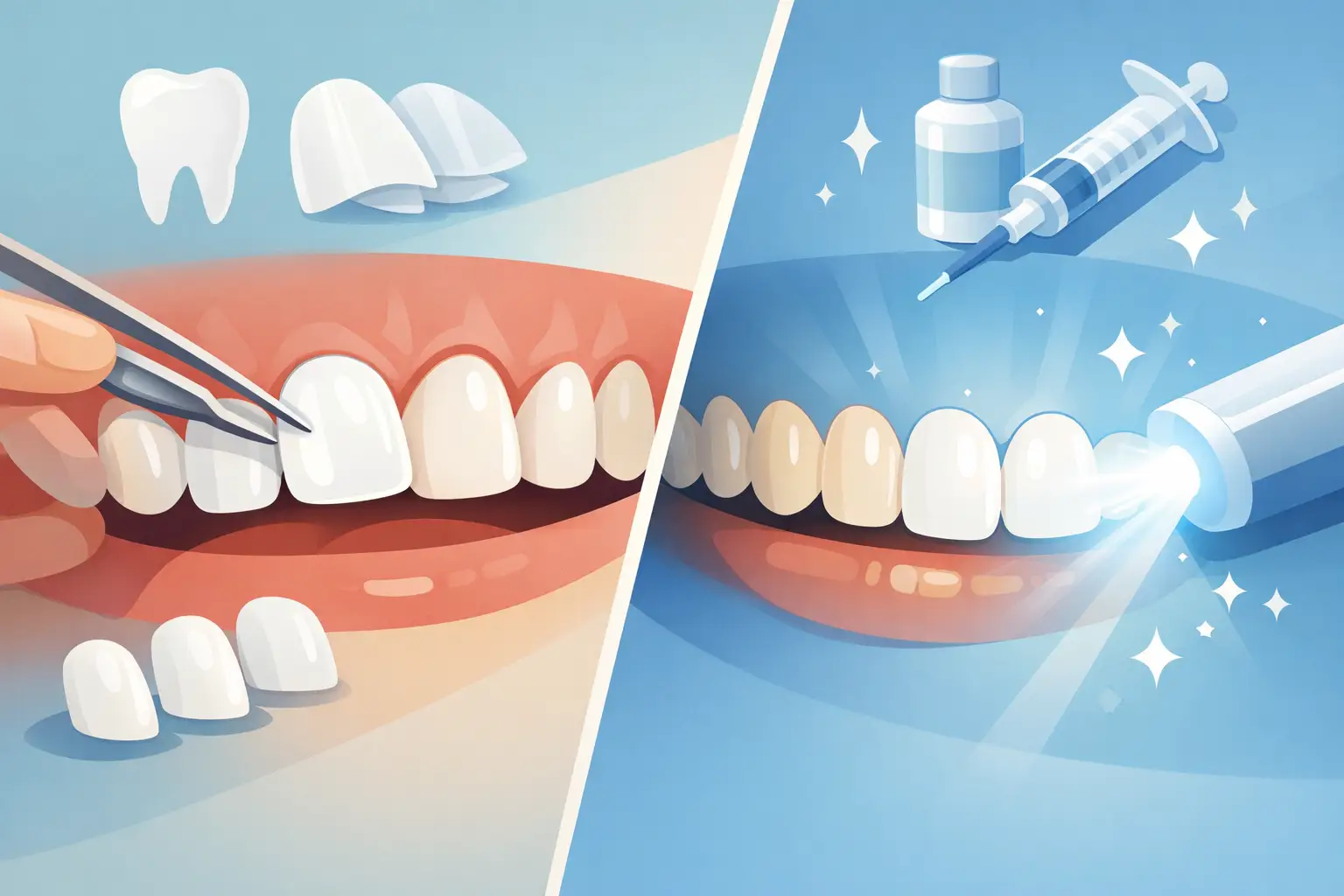
Teeth whitening changes the color of your natural tooth enamel. Veneers cover the front surface of selected teeth with thin, custom-made porcelain shells that can change color, shape, size, and apparent alignment.
That difference matters. Whitening is usually the more conservative option when your teeth are healthy and you like their shape and position but want a fresher, brighter shade. Veneers are a more comprehensive cosmetic treatment for teeth that are deeply discolored, chipped, worn, uneven, or difficult to improve with whitening alone.
Neither option is automatically “better.” The right answer depends on what you want to change and how much change your smile needs.
When Teeth Whitening May Be the Better Choice
Professional whitening is often a strong first step for patients whose primary concern is yellowing or staining. Coffee, tea, red wine, tobacco, aging, and certain foods can gradually darken the enamel. A professionally supervised whitening treatment can lift many of these stains while preserving the natural character of your smile.
Whitening may be a good fit if your teeth are generally straight, free of major chips, and proportionate to your smile. It is also a practical option if you want visible improvement for an upcoming event, professional milestone, or family photos without changing the structure of your teeth.
Professional care matters because sensitivity, uneven whitening, and gum irritation can occur when treatment is not properly planned. Your dentist can evaluate existing dental work, identify the source of discoloration, and help you pursue a shade that looks bright without looking artificial.
Whitening does have limits. It does not change the color of crowns, fillings, bonding, bridges, or veneers. It may also have a limited effect on gray-toned discoloration caused by trauma, certain medications, or changes inside the tooth. In those cases, whitening may improve the surrounding teeth but not fully resolve the color difference.
Results also require maintenance. Your daily habits, enamel condition, and chosen shade all affect how long your teeth stay bright. Many patients use occasional touch-ups to maintain their preferred result.
When Veneers Can Create a More Complete Change
Porcelain veneers are designed for patients who want to improve more than tooth color. Because each veneer is individually planned, it can be shaped and shaded to improve several cosmetic concerns at once.
Veneers may be worth considering when front teeth have persistent discoloration that does not respond predictably to whitening, small chips, visible cracks, worn edges, gaps, or irregular shapes. They can also help create a more balanced appearance for teeth that look slightly short, narrow, or uneven.
A well-designed veneer should not look like a generic, overly white tooth. It should complement your facial features, lip line, neighboring teeth, and preferred smile style. Some patients prefer a subtle refinement. Others are looking for a more noticeable smile transformation. Both goals deserve thoughtful planning.
The trade-off is that veneers are a long-term commitment. Although preparation varies by case and some conservative options require minimal enamel adjustment, veneers generally involve modifying the tooth surface so the restoration fits naturally. They are not considered reversible. Porcelain is highly durable, but it can still chip or loosen over time and will eventually need replacement.
Veneers also do not eliminate the need for daily brushing, flossing, regular cleanings, or bite protection when appropriate. If you grind or clench your teeth, a custom nightguard may help protect both your veneers and natural teeth.
Health Comes Before Cosmetic Treatment
A healthy foundation is essential before either whitening or veneers. Cavities, gum inflammation, active gum disease, tooth pain, and leaking restorations should be treated first. Whitening products can worsen discomfort in sensitive teeth, while veneers should not be placed over untreated decay or unstable gum tissue.
This is especially important for patients who have not been to the dentist in a while. A smile may look dull because of staining, but it may also have buildup, enamel wear, recession, or older dental work that needs attention. Sometimes a professional cleaning and preventive care make a meaningful difference before any cosmetic treatment is needed.
Your dentist will also look at your bite. If teeth meet unevenly or you place heavy pressure on certain front teeth, veneers may need additional planning to avoid premature damage. In some cases, orthodontic treatment such as Invisalign may be a better first step before cosmetic refinements.
How to Decide Between Whitening and Veneers
Start by naming your main goal as specifically as possible. If you are saying, “My teeth look too yellow,” whitening is often the logical place to begin. If you are saying, “My front teeth are dark, chipped, uneven, and make me hide my smile,” veneers may offer a more complete solution.
It also helps to think about your timeline and budget. Whitening is typically less involved and less expensive than veneers, with results that can be maintained through future touch-ups. Veneers require more planning, laboratory work, and a larger financial commitment, but they can address concerns that whitening cannot change.
For some patients, the ideal plan combines treatments. Whitening the natural teeth first may establish a lighter baseline. Then, if a few front teeth still need shape or color correction, veneers or bonding can be designed to match the new shade. Planning the order of treatment carefully helps avoid mismatched colors.
What to Expect at a Cosmetic Consultation
A personalized consultation should feel clear and comfortable, not rushed. Your dentist will examine your teeth and gums, discuss your dental history, and ask what you would like to see when you smile. Sharing photos or pointing out the details that bother you can be helpful, whether it is one darker tooth or an overall lack of brightness.
For whitening, the discussion may include your current shade, sensitivity history, existing crowns or fillings, and the type of result you can realistically expect. For veneers, your dentist may evaluate tooth proportions, bite, gum line, enamel thickness, and the condition of nearby teeth. X-rays or digital imaging may be recommended when needed for safe treatment planning.
At Finesse Family Dental, cosmetic recommendations are considered alongside your overall oral health and long-term comfort. That means you can ask direct questions about durability, maintenance, sensitivity, alternatives, and what your final result is likely to look like before moving forward.
Frequently Asked Questions
Can I whiten veneers later?
No. Whitening gel does not lighten porcelain veneers. If you want to brighten your natural teeth, it is often best to do so before new veneers are made so your restorations can be matched to the shade you want.
Do veneers look natural?
They can look very natural when they are carefully planned. Natural-looking veneers are not simply the brightest possible shade. Their shape, translucency, contour, and color are selected to work with the rest of your smile.
Are veneers permanent?
Veneers are a permanent treatment decision because the teeth are typically prepared to receive them. The veneers themselves are not expected to last forever, but with good home care, regular dental visits, and protection from grinding, porcelain veneers can serve patients well for many years.
A confident smile should still feel like your smile. Whether the right next step is a gentle whitening treatment, carefully designed veneers, or simply restoring dental health first, a personal conversation with a trusted dentist can bring clarity and help you choose with confidence.