A denture that feels clean, secure, and comfortable can make meals, conversations, and smiles feel much more natural. Knowing how to care for dentures protects more than the appliance itself. It also helps protect your gums, remaining teeth, breath, and overall oral health.
Dentures are made to handle everyday life, but they are not indestructible. They can stain, warp, crack, or become uncomfortable when they are cleaned with the wrong products or left without professional attention. A simple, consistent routine is the best way to keep them looking their best and fitting comfortably.
Clean Dentures Every Day
Dentures collect food particles, plaque, and bacteria just like natural teeth do. Even if you wear a full denture and no longer have natural teeth, cleaning it daily is essential for fresh breath and healthy gum tissue.
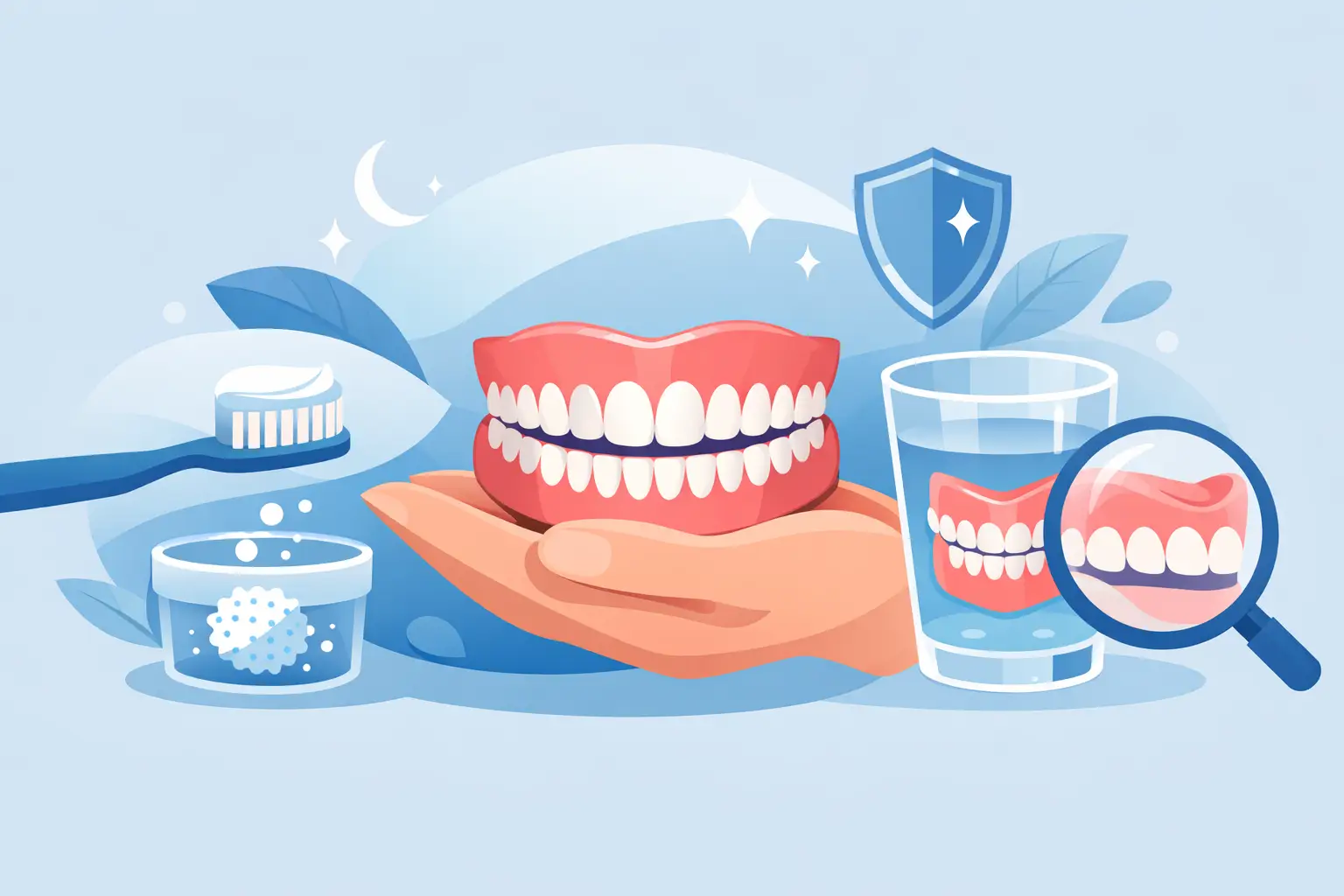
Remove your dentures after eating when possible and rinse them under cool or lukewarm water to remove loose food debris. For a more complete cleaning, use a soft denture brush or a soft-bristled toothbrush reserved only for your dentures. Brush all surfaces gently, including the areas that sit against your gums.
Use a cleanser specifically designed for dentures or a mild liquid soap. Ordinary toothpaste may seem like the obvious choice, but many toothpastes are abrasive enough to leave tiny scratches in denture material. Those scratches can hold bacteria and stains, making dentures harder to keep fresh over time.
Avoid household cleaners, bleach, whitening products, and powdered cleansers unless your dentist has specifically advised their use. These products can damage denture materials, fade pink acrylic, or irritate the tissues in your mouth.
Handle Them Over a Soft Surface
Dentures can break if they are dropped, especially if they land on tile, stone, or a hard bathroom counter. When cleaning them, place a folded towel in the sink or fill the basin with a small amount of water. This gives your dentures a little protection if they slip from your hands.
Be gentle around clips, attachments, and thin acrylic areas. Partial dentures may include metal clasps that can bend when forced, while implant-supported dentures have connection points that need careful cleaning. If a clasp feels loose or an attachment no longer snaps into place properly, do not try to adjust it yourself.
Soak Dentures Properly at Night
Most removable dentures should be taken out at night. Giving your gums and jaw tissues time without constant pressure can reduce irritation and support healthier oral tissues. Removing dentures also gives you the opportunity to thoroughly clean your mouth before bed.
Keep dentures moist whenever they are out of your mouth. Drying out can cause some denture materials to lose their shape. Store them in clean water or a denture-soaking solution recommended by your dentist. Always follow the product instructions, particularly if your denture has metal components, because certain solutions are not appropriate for every type of appliance.
Do not use hot water. High heat can warp dentures, sometimes enough to affect the fit. A denture that no longer fits well can create sore spots, make chewing difficult, and increase the risk of cracking.
There are exceptions to overnight removal. Some patients with immediate dentures, surgical dentures, or certain implant-supported restorations may be given different instructions during healing. Follow the plan provided by your dental team rather than relying on a general rule.
Clean Your Mouth, Too
A clean denture placed on unclean gums can still lead to odor, irritation, and infection. Every time you remove your dentures, gently clean your gums, tongue, cheeks, and palate with a soft toothbrush or a clean, damp washcloth. This helps remove plaque and stimulates circulation in the tissues beneath the denture.
If you have a partial denture, brush and floss your natural teeth carefully every day. The teeth beside a partial denture are especially important because they may help support the appliance. Preventing cavities and gum disease in those teeth helps preserve your smile and may help your partial denture fit and function longer.
Pay attention to your tongue as well. Bacteria on the tongue are a common source of bad breath, and a gentle tongue cleaning can make a noticeable difference in how fresh your mouth feels.
Use Denture Adhesive Carefully
Denture adhesive can be helpful for some patients, particularly when speaking, eating, or building confidence while adapting to a new denture. A thin, even layer is usually all that is needed. More adhesive is not better, and excess product can make cleaning difficult.
Adhesive should not be used to compensate for a loose or painful denture. Dentures may loosen over time as the jawbone and gum tissues naturally change shape. If you need increasingly more adhesive, notice food collecting beneath the denture, or feel pressure in new areas, it may be time for an adjustment, reline, or replacement.
Remove adhesive residue from both your dentures and your gums each day. Leaving it in place can trap bacteria and contribute to irritation. Your dentist can recommend an adhesive that is appropriate for your needs and show you how much to use.
Protect Dentures From Damage and Stains
Dentures are durable, but daily habits affect how long they stay attractive. Coffee, tea, red wine, tobacco, and strongly colored foods can stain denture teeth over time. Regular cleaning helps, but professional cleaning may be needed if discoloration becomes noticeable.
Keep dentures away from pets and young children. Dogs are particularly drawn to the smell of dentures and can chew through them quickly. When dentures are not in your mouth, store them in their case or in a safe container of water where they cannot be knocked over or mistaken for a toy.
Never try to glue, file, reshape, or repair dentures at home. Store-bought repair kits may seem convenient, but they can change the fit, damage the material, and make a professional repair more difficult. A repaired denture also needs to be checked to make sure it is not causing harmful pressure on your gums.
Watch for Changes in Fit or Comfort
A well-fitting denture should feel secure without causing persistent pain. Mild pressure can be normal when you first receive a new denture or after an adjustment, but ongoing soreness is not something you should simply tolerate.
Contact your dentist if you notice cracked or chipped teeth, broken acrylic, loose clasps, difficulty chewing, clicking when you speak, recurring sore spots, bleeding gums, or a denture that suddenly feels unstable. White patches, red areas, swelling, or a burning sensation beneath a denture also deserve prompt attention. These symptoms can be caused by irritation, a fungal infection, or an appliance that no longer fits correctly.
Regular dental visits remain essential, even if you have full dentures. Your dentist can examine your gums, screen for oral cancer, evaluate the fit of your denture, and identify changes before they become more uncomfortable or costly to treat. Many dentures eventually need a reline as the shape of the mouth changes, and they may need replacement after years of normal use.
Adjusting to New Dentures
New dentures often require a short adjustment period. Speaking may feel different at first, and eating is usually easier when you begin with soft foods cut into small pieces. Chew slowly and try to use both sides of your mouth at the same time to keep the denture balanced.
Reading aloud can help your tongue and facial muscles adapt to speaking with dentures. If certain words feel difficult, practice them rather than avoiding conversation. Most patients become more comfortable with time, but you should not wait through significant pain or repeated slipping. Small professional adjustments can make a major difference.
At Finesse Family Dental, denture care is approached as part of your full oral health, not as a one-size-fits-all appliance. Whether you have a full denture, partial denture, or an implant-supported option, personalized guidance can help you maintain comfort, function, and confidence.
A few minutes of careful daily care can keep dentures cleaner, more comfortable, and more dependable. If something about your denture has changed, a timely dental visit is often the simplest path back to an easier smile.