A smile concern rarely fits into one neat category. You may like the shape of your teeth but wish they were brighter, or feel happy with their color but notice crowding in photos. The best cosmetic dentistry treatments are the ones that address what you see while respecting what your teeth and gums need to stay healthy for years to come.
For patients in Fremont and the East Bay, cosmetic dentistry can be a practical way to feel more comfortable at work, in family photos, and in everyday conversations. The right plan is personal. It should consider your goals, timeline, oral health, budget, and how much change you want to make.
What Makes a Cosmetic Treatment the Right Choice?
Cosmetic dentistry improves the appearance of teeth, but quality treatment should never be appearance-only. A beautiful result depends on healthy gums, a stable bite, and restorations that are designed to function comfortably.
For example, whitening may be an excellent option for naturally healthy teeth with surface or age-related discoloration. But if a tooth is cracked, worn, or has a large old filling, a crown or veneer may be more appropriate. If teeth are straightened without addressing active gum disease, the result may not last as well as it should.
A thoughtful exam helps identify the source of your concern before treatment begins. This is especially valuable when several issues overlap, such as uneven spacing, discoloration, and worn tooth edges. Rather than choosing a procedure based on a trend, you can choose a solution that works for your smile.
Best Cosmetic Dentistry Treatments to Consider
Professional Teeth Whitening
Professional whitening is often the simplest way to make a noticeable change. It lifts stains caused by coffee, tea, red wine, tobacco, and natural aging, helping teeth appear brighter while maintaining their natural character.
Whitening works best on healthy natural enamel. It will not change the color of crowns, veneers, fillings, or bonding, so patients with visible dental work may need a plan that coordinates colors. Sensitivity can occur, but a dentist can recommend an approach that is more comfortable for your teeth.
This treatment is a strong choice when your main goal is a brighter smile and your teeth are otherwise well aligned and in good condition. It can also be a useful first step before replacing older visible restorations so the new materials match your preferred shade.
Porcelain Veneers
Veneers are thin, custom-made porcelain shells placed over the front surface of teeth. They can improve the appearance of persistent discoloration, small gaps, uneven edges, chips, minor shape concerns, and teeth that look disproportionate in the smile.
Their biggest advantage is versatility. A carefully planned veneer can change color, shape, and symmetry at the same time. Porcelain also reflects light in a way that can look very natural. For patients seeking a more dramatic smile transformation, veneers may offer a highly polished, long-lasting option.
There are trade-offs to consider. Veneers require careful preparation and are usually an irreversible treatment because a small amount of enamel may need to be adjusted. They also need excellent home care and routine dental visits. If you grind or clench your teeth, protecting veneers with a nightguard may be recommended.
Invisalign Clear Aligners
Crowding, gaps, and teeth that have shifted since earlier orthodontic treatment can affect more than appearance. Misalignment may make certain areas harder to brush and floss, and it can sometimes contribute to uneven wear.
Invisalign uses a series of clear, removable aligners to gradually move teeth into better positions. Many adults appreciate that aligners are discreet and can be removed for meals and brushing. They can be a good fit for busy professionals and older teens who want orthodontic treatment without traditional brackets.
Success depends on wearing aligners as instructed, usually for most of the day and night. Clear aligners are not the best answer for every orthodontic issue, particularly more complex bite concerns. A professional evaluation can determine whether Invisalign is appropriate or whether another orthodontic approach would be more predictable.
Dental Bonding
Dental bonding uses tooth-colored composite resin to repair small chips, close minor gaps, reshape uneven edges, or cover localized discoloration. It is often more conservative than veneers because less tooth structure is altered.
Bonding can be an appealing choice when a patient wants a focused improvement with a lower upfront cost. In skilled hands, it can blend beautifully with surrounding enamel. However, composite resin can stain, chip, or wear more easily than porcelain, especially for patients who bite their nails, chew ice, or grind their teeth.
For a small chip on a front tooth or a subtle spacing concern, bonding may be all that is needed. For a larger cosmetic redesign, porcelain veneers may offer greater durability and color stability.
Crowns and Inlays for Damaged Teeth
A tooth does not have to be healthy enough for a veneer to become attractive again. When a tooth has extensive decay, a large failing filling, fracture lines, or significant wear, a crown or inlay may restore both strength and appearance.
Modern tooth-colored restorations can be designed to blend naturally with neighboring teeth while improving chewing comfort. This is where cosmetic and restorative dentistry often meet. The goal is not simply to cover a problem, but to rebuild a tooth in a way that looks balanced and performs well.
The treatment choice depends on how much healthy tooth structure remains. An inlay may be suitable when damage is more limited, while a crown covers and protects a more extensively compromised tooth.
Dental Implants and Bridges
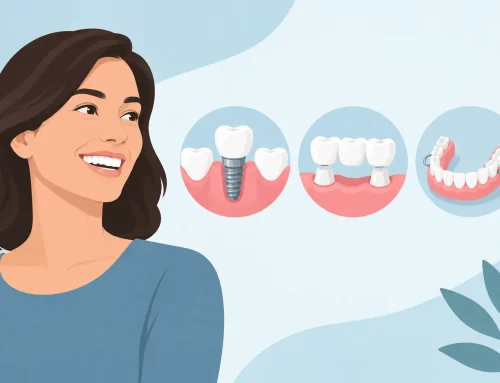
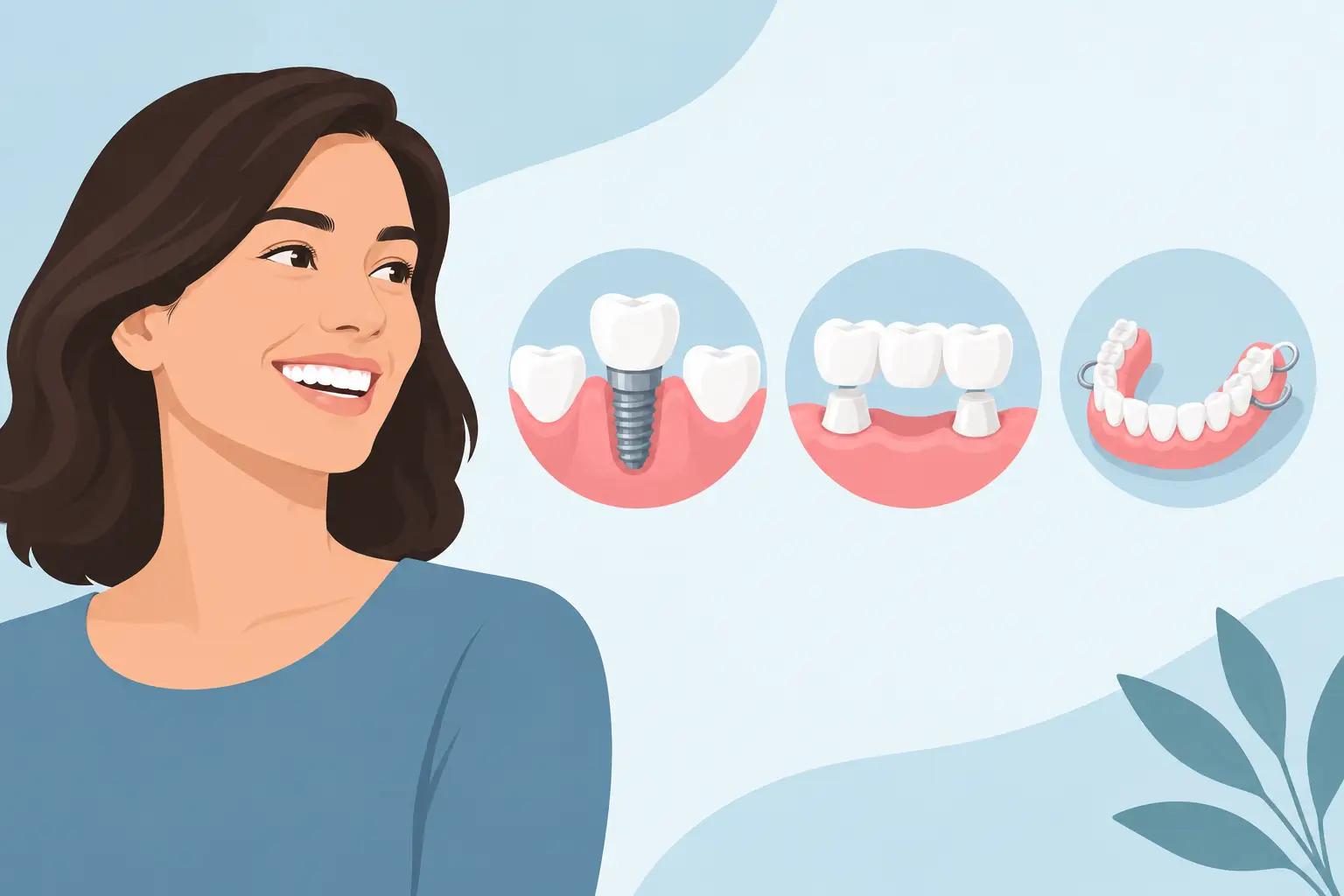
A missing tooth can change the appearance of a smile, but it may also affect speech, chewing, and the position of nearby teeth. Dental implants replace a missing tooth root and support a custom crown. They are valued for their stability and for helping preserve the jawbone in the area of the missing tooth.
A bridge can also be an effective solution, particularly when neighboring teeth already need crowns or when an implant is not the right option for medical, anatomical, financial, or timeline reasons. Neither option is automatically better for everyone.
Before replacing a missing tooth, your dentist should review gum health, bone support, bite forces, and the condition of surrounding teeth. A result that looks natural needs a strong foundation.
When Gum Health Comes First
Bleeding gums, persistent bad breath, gum recession, or loose teeth should be evaluated before elective cosmetic work. Gum disease can affect the stability and appearance of teeth, and inflamed gums can make it difficult to plan restorations accurately.
Treating periodontal concerns first protects your investment in cosmetic care. It can also improve the look of your smile on its own by reducing inflammation and creating healthier gum contours. Gentle modern options, including Waterlase technology in appropriate cases, can help patients receive needed gum care with greater comfort.
How to Plan a Smile You Will Still Love Years From Now
The most satisfying cosmetic results are usually not the brightest or most dramatic. They are the ones that look like they belong to you. A good plan takes facial features, lip line, tooth proportions, skin tone, and personal preferences into account rather than aiming for a one-size-fits-all shade or shape.
Be honest about your priorities during your consultation. Are you preparing for a wedding or job change? Are you bothered by one tooth or looking for a full smile redesign? Do you prefer a subtle, natural improvement or a more noticeable transformation? These answers help determine whether a single treatment, or a sequence of treatments, makes sense.
At Finesse Family Dental, cosmetic recommendations are made with the same attention to comfort, function, and long-term oral health as every other aspect of care. Patients can discuss their concerns, ask questions without pressure, and understand the expected benefits and limitations before moving forward.
A confident smile does not need to look artificial or follow someone else’s idea of perfection. Start with an exam, share what you would like to change, and give yourself the benefit of a plan designed for your own healthy, natural-looking smile.