A dull ache behind your last molar can make every meal feel like a test. For many teens and adults, wisdom teeth become noticeable when they begin to erupt, but not every wisdom tooth needs to be removed. The right decision depends on its position, the available space in your mouth, your symptoms, and what X-rays show below the gumline.
At Finesse Family Dental, we take a careful, personal approach to wisdom tooth care. Whether you need reassurance, monitoring, or treatment, the goal is the same: protect your comfort, your oral health, and the teeth you rely on every day.
What Are Wisdom Teeth?
Wisdom teeth are the third set of molars, located at the very back of the mouth. They usually emerge between the late teens and mid-20s, although timing varies widely. Some people have four wisdom teeth, some have fewer, and others never develop them at all.
These teeth once helped our ancestors chew tougher, less processed foods. Modern jaws are often smaller, however, leaving limited room for an additional molar. When there is enough space and the tooth grows in straight, a wisdom tooth may function normally. When space is limited or the tooth comes in at an angle, it can create problems that are difficult to see or clean.
When Wisdom Teeth Can Stay
Removal is not automatic. A wisdom tooth may be monitored if it has fully erupted, is positioned properly, does not cause pain, and can be brushed and flossed effectively. It also needs to have healthy gums around it and no signs of decay, infection, or damage to the neighboring tooth.
Routine exams and digital X-rays help your dentist track changes over time. This matters because a tooth that seems quiet today can become harder to clean or begin affecting the tooth beside it later. Monitoring is a proactive choice, not a decision to ignore the area.
For patients with healthy, stable wisdom teeth, consistent home care is especially important. The back corners of the mouth are easy to miss, so take extra time to angle your toothbrush toward the last molars and clean along the gumline.
Signs a Wisdom Tooth Needs Attention
Pain is a common reason patients schedule an appointment, but discomfort is not the only warning sign. Wisdom teeth can cause damage before they become severely painful. Call your dentist if you notice ongoing tenderness in the back of the mouth, swollen or bleeding gums, a bad taste, persistent bad breath, jaw stiffness, or pain when chewing.
A partially erupted wisdom tooth is particularly prone to infection. A flap of gum tissue may cover part of the tooth, creating a space where food and bacteria collect. This can lead to inflammation or infection around the tooth, sometimes called pericoronitis. Symptoms can come and go, which is one reason people may delay care, but repeated flare-ups should be evaluated.
You should also schedule an exam if you see a new cavity, notice food frequently getting trapped behind your second molar, or feel pressure near the back of your jaw. X-rays can reveal concerns that are not visible during a regular look in the mirror, including cysts, bone changes, or a wisdom tooth pressing against an adjacent tooth.
When to seek prompt care
Facial swelling, fever, difficulty swallowing, trouble breathing, or an inability to open your mouth normally can signal a more serious infection. These symptoms deserve prompt professional attention. Do not try to manage significant swelling or infection with home remedies alone.
Why Some Wisdom Teeth Become Impacted
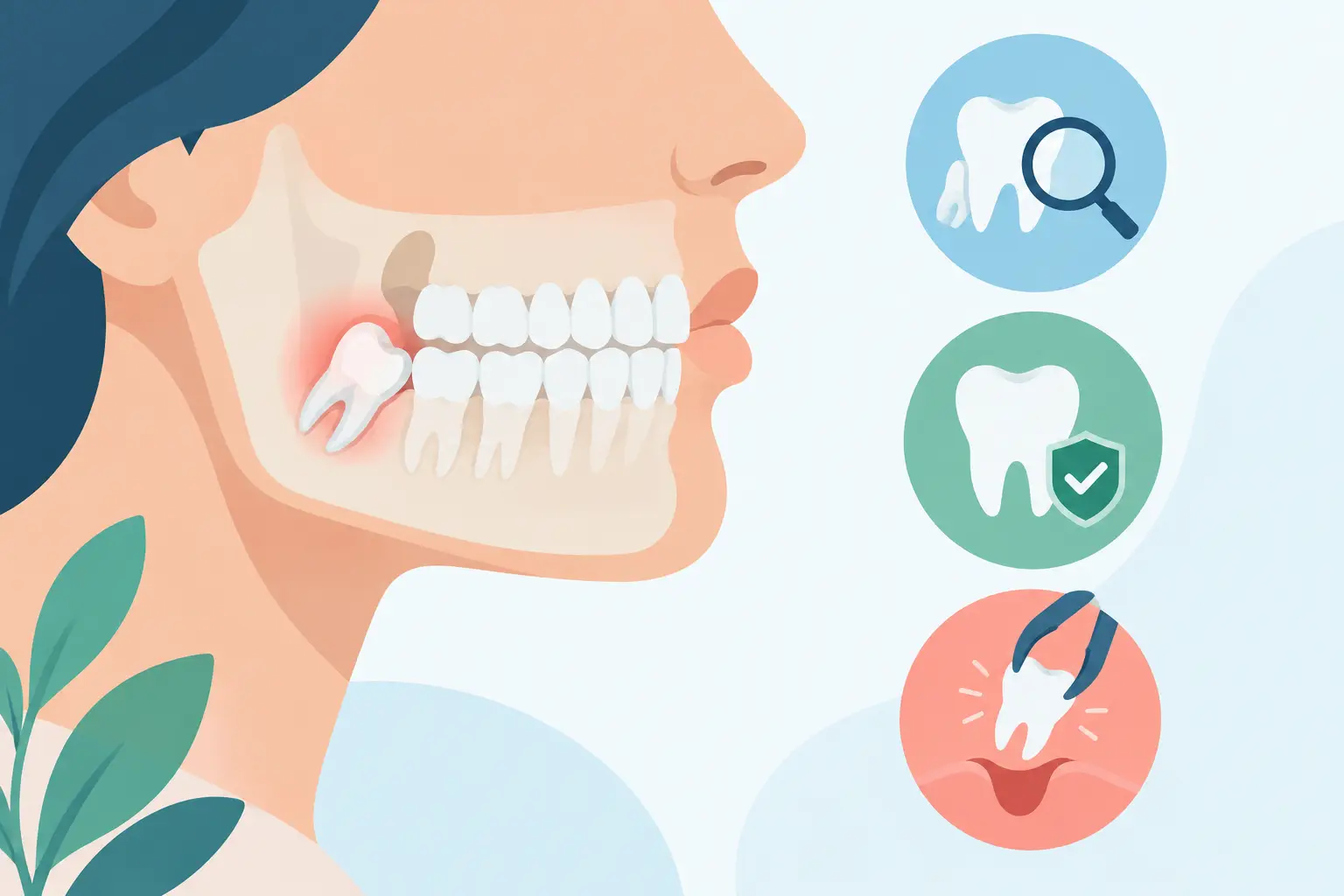
An impacted wisdom tooth does not have enough room to fully erupt into a normal position. It may remain completely beneath the gums, partially emerge, or grow sideways toward the tooth in front of it. Some impacted teeth never cause symptoms, while others can lead to pain, infection, decay, or damage to neighboring teeth.
There are several common positions. A tooth may lean forward toward the second molar, angle backward, sit horizontally, or remain upright but trapped beneath gum and bone. The exact position matters because it affects the risk of future problems and the complexity of treatment.
A dentist uses X-rays to assess the tooth’s roots, the surrounding bone, and its relationship to nearby structures. For lower wisdom teeth, this may include evaluating their proximity to nerves in the jaw. For upper teeth, the sinus area may be part of the assessment. This information helps determine whether removal is recommended and how to plan care safely.
Deciding Whether Removal Is Right for You
Wisdom tooth removal may be recommended when there is infection, pain, repeated gum inflammation, decay that cannot be predictably restored, gum disease, damage to the adjacent tooth, or a concerning position on X-ray. Removal can also be considered when a tooth is likely to create problems and monitoring would carry more risk than treatment.
Age is one factor, but it is not the only one. Younger patients often heal efficiently because roots may not be fully developed, yet adults can also have successful extractions. The decision should be based on your individual health, the tooth’s anatomy, your symptoms, and the likely benefits of keeping versus removing it.
Crowding is another issue that deserves an honest conversation. Wisdom teeth are not always the cause of shifting front teeth, and removing them does not automatically straighten a smile. If you are concerned about tooth movement or have completed orthodontic treatment, your dentist can evaluate your bite and discuss whether wisdom teeth are contributing to a specific concern.
What to Expect During Wisdom Tooth Treatment
Before treatment, your dental team will review your medical history, medications, allergies, and imaging. You should feel comfortable asking questions about anesthesia options, the procedure itself, expected recovery, and any instructions that apply to your health needs.
The treatment experience varies. A fully erupted tooth may be removed similarly to another extraction. An impacted tooth can require a more involved surgical approach, including gently accessing the tooth through the gum tissue and, when necessary, dividing the tooth into smaller sections for removal. The goal is to remove the tooth carefully while minimizing trauma to the surrounding area.
Comfort matters. Modern local anesthesia can keep the treatment area numb, and your dentist can discuss additional options when appropriate. Many patients are understandably anxious before an extraction, especially if they have heard difficult stories from friends or family. Clear communication, a calm environment, and an experienced team can make a meaningful difference.
Recovery After Wisdom Tooth Removal
Most people experience some swelling, tenderness, and limited jaw opening for several days after removal. Your dentist will provide specific instructions, but recovery typically includes resting, using cold packs during the first day, taking prescribed or recommended medications as directed, and choosing soft foods for a short period.
Protecting the blood clot at the extraction site is essential. Avoid smoking, forceful rinsing, and drinking through straws during the early healing period, since these actions can dislodge the clot and increase the risk of dry socket. Keep your mouth clean according to your post-treatment instructions, which may include gentle rinsing after the first day.
Plan ahead by having easy foods available, such as yogurt, eggs, mashed potatoes, smoothies eaten with a spoon, soup that has cooled to a safe temperature, and other soft meals. Return to regular foods gradually as your comfort improves. Contact your dentist if pain becomes more severe after initially improving, bleeding does not slow, swelling worsens after several days, or you develop fever or other concerning symptoms.
A Thoughtful Plan Protects Your Smile
There is no one-size-fits-all answer for wisdom teeth. Some can remain healthy for life with regular monitoring, while others benefit from treatment before discomfort or damage becomes more serious. A thorough exam and X-rays replace guesswork with a plan that fits your smile, health history, and comfort. If the back of your mouth has been bothering you, a timely dental visit can provide clarity and peace of mind before a small concern becomes a painful interruption.