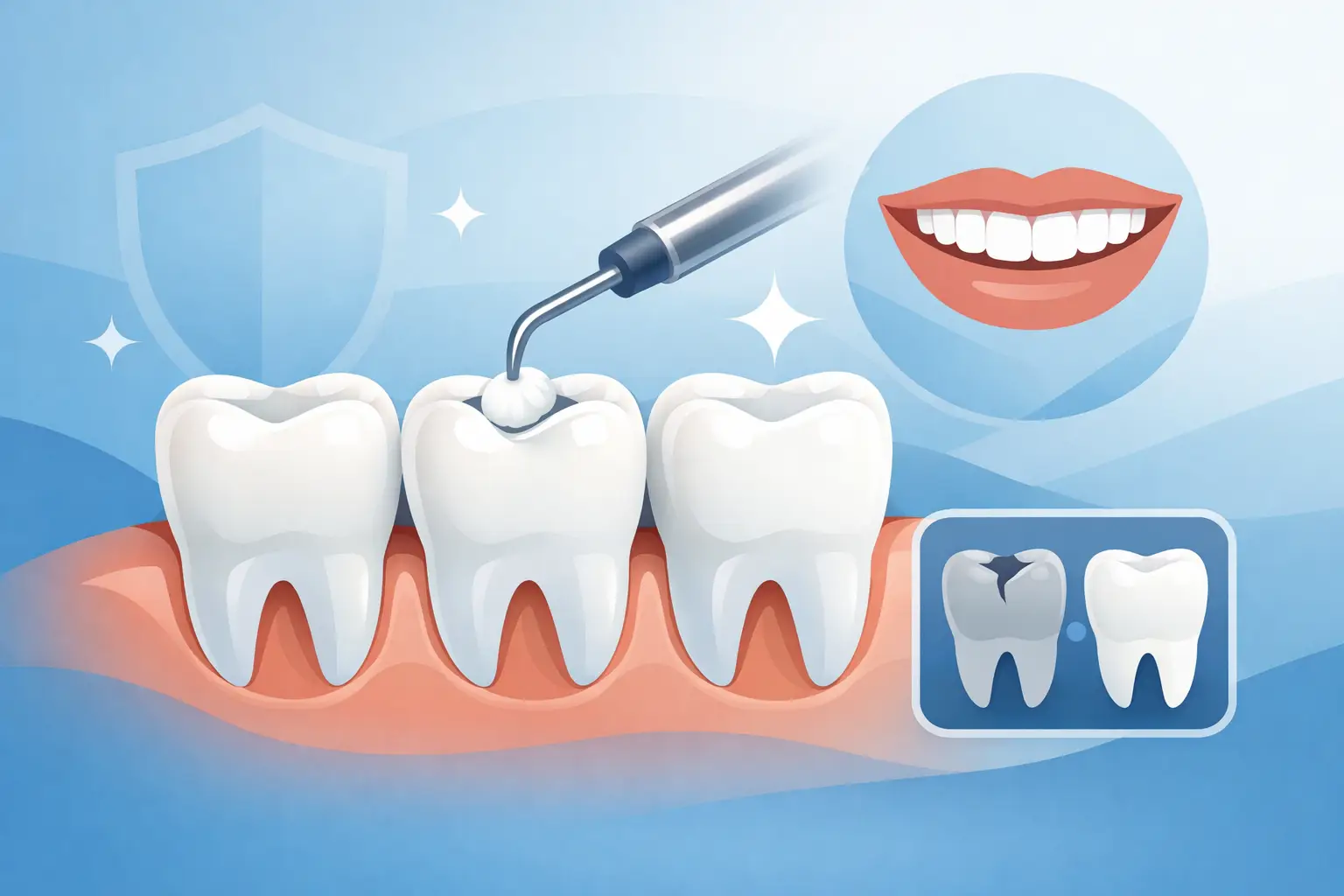
A cavity can be small, but the thought of a visible dark spot in your smile can feel much bigger. The benefits of tooth-colored fillings go beyond repairing decay: they help restore the look, strength, and everyday comfort of a tooth without drawing unwanted attention to dental work.
For many patients, a filling is an opportunity to stop a problem early while keeping their smile looking natural. Modern composite materials allow your dentist to match the shade of your tooth closely, so the restoration blends in when you talk, laugh, and smile. At Finesse Family Dental, we take time to make treatment feel clear, gentle, and personal, whether you need one simple filling or care for several teeth.
What Are Tooth-Colored Fillings?
Tooth-colored fillings are usually made from a durable composite resin material. Your dentist removes the decayed or damaged portion of the tooth, prepares the area, then places the composite in layers. Each layer is shaped and hardened with a special curing light before the filling is polished to feel smooth and look natural.
Composite fillings can be used for cavities, small chips, worn edges, and replacement of older fillings in appropriate cases. Because the material comes in different shades, it can be selected to complement the surrounding enamel. This makes it especially useful for front teeth and the visible areas of back teeth.
Tooth-Colored Fillings Benefits Patients Notice
The most obvious advantage is appearance. Traditional metal fillings may show as dark areas when you smile or open your mouth. A well-matched composite filling is designed to blend with your natural tooth color, helping your restoration stay discreet.
Appearance is only part of the picture. Composite resin bonds directly to the tooth structure. This bonding can support a conservative approach to treatment because the dentist often removes less healthy tooth structure than may be required for some older-style filling materials. Preserving natural enamel whenever possible is valuable for the long-term health of your tooth.
Patients also appreciate how versatile these fillings can be. A small cavity between teeth, a chip from biting something hard, or a worn edge that catches on your lip may all be potential uses for composite material. The right treatment depends on the size and location of the damage, as well as how much pressure the tooth receives when you bite.
Another benefit is confidence. If you have been covering your mouth when you laugh because of a noticeable filling, replacing it with a natural-looking restoration may make a meaningful difference. Cosmetic improvement and restorative care can often work together in one straightforward appointment.
A Natural Look Does Not Mean Compromising Function
Composite fillings are made to handle everyday chewing forces when they are placed in the right situation and cared for properly. They are a reliable choice for many small to moderate cavities. Your dentist will carefully shape the filling so your bite feels comfortable and your tooth works naturally again.
That said, every tooth has different needs. A very large cavity, a cracked tooth, or a tooth that has lost substantial structure may need more than a filling. An inlay, onlay, or crown may offer better protection in those cases, particularly on molars that absorb strong chewing pressure. Recommending a more protective restoration is not about making treatment more complicated. It is about helping prevent a weakened tooth from breaking later.
If an old filling is leaking, stained around the edges, broken, or associated with new decay, replacement may be appropriate. However, an older filling that is stable and healthy does not automatically need to be changed simply because it is metal. A thorough exam and dental X-rays help determine what is best for your oral health.
What to Expect During a Filling Appointment
Many people hear the word “filling” and immediately expect discomfort. In reality, treatment is often efficient and manageable, especially when decay is found early. Your dental team begins by reviewing the tooth and explaining what is needed. Local anesthetic can numb the area so you can remain comfortable while the tooth is treated.
After the decay or damaged material is removed, the tooth is cleaned and prepared for the composite resin. The material is placed with care, shaped to match the tooth, and hardened. Your dentist will check your bite before smoothing and polishing the filling.
You may feel numb for a few hours afterward. Once the numbness fades, the tooth may have mild sensitivity to temperature or pressure for a short time. This commonly improves as the tooth settles. If your bite feels high, pain persists, or sensitivity becomes stronger rather than better, contact your dental office. A simple adjustment may be needed.
How Long Do Tooth-Colored Fillings Last?
There is no single lifespan for every composite filling. Many can last for years, but durability depends on the filling’s size and location, your bite, home care, diet, and habits such as teeth grinding. A small filling in a low-pressure area often has different expectations than a large restoration on a molar.
Daily habits make a real difference. Brushing twice a day with fluoride toothpaste, cleaning between teeth, and maintaining regular checkups help protect the edges of your fillings from new decay. Avoid using teeth to open packages, and be cautious with hard candy, ice, or nonfood objects that can chip natural teeth and restorations alike.
For patients who clench or grind their teeth, a custom night guard may help reduce excessive pressure. Your dentist can also monitor fillings during routine visits and identify wear before it develops into a larger concern.
Are Composite Fillings Right for Children and Adults?
Tooth-colored fillings can be an excellent choice for both children and adults. For parents, a natural-looking filling may feel more reassuring for a child’s visible teeth. For adults, composite material can restore a cavity or chip without changing the appearance of a professional, confident smile.
The best option still depends on the individual tooth. Children with extensive decay, adults with heavy grinding, and patients with difficult-to-keep-dry treatment areas may need a different approach. Your dentist will consider the tooth’s condition, your oral health history, and practical factors such as comfort and budget before making a recommendation.
Insurance coverage varies by plan. Many PPO plans provide benefits for medically necessary fillings, though coverage levels and material allowances can differ, particularly for back teeth. Asking your dental office to review your benefits before treatment can help you understand expected out-of-pocket costs.
Choosing Care That Protects Your Smile
A tooth-colored filling may be a small restoration, but it deserves thoughtful planning and precise placement. The goal is not simply to cover a cavity. It is to remove decay, protect as much healthy tooth structure as possible, restore a comfortable bite, and help your smile continue to look like your own.
If you have sensitivity, notice a dark spot, catch floss around an old filling, or see a chip in a tooth, do not wait for the issue to become painful. A prompt exam can give you clear answers and often allows for simpler, more comfortable care.